
The joy

The joy

Joy is associated with the fire element in TCM

Joy is the emotion linked to the fire element and to the Heart organ in Traditional Chinese Medicine (TCM). Unlike the four other emotions listed in Chinese medicine (fear, anger, sadness, worry), joy is an emotion that we enjoy feeling. It is perceived as positive, and it is! Indeed, feeling joy and expressing it is natural; it is a sign of good Heart health.

In TCM, the Heart occupies a prominent place in overall balance, since it is considered the “emperor of organs.” The Heart is therefore responsible for the overall health of the individual.

Joy is only considered pathological when it is excessive, that is, when the person is in a state of elation, frenzy, agitated, euphoric, or laughing very loudly all the time. However, this is not the major cause of Heart imbalance.

The heart sensitive to emotional excesses

The heart is generally an organ sensitive to emotional excesses.

Sadness, although associated with the Lungs in the Five Elements theory, significantly affects Heart Qi. The Lungs and Heart are closely linked in that one governs Qi and the other Blood, and both are interdependent. Sadness will create a deficiency of Lung Qi, which, in turn, will create a deficiency of Heart Qi.

Similarly, anger, which in TCM includes frustration, resentment, and even depression, will first affect the Liver, and indirectly the Heart. Indeed, anger causes a rise in Liver Yang (Liver Fire), which can transform into Heart Fire.

Functions of the Heart in TCM

The Heart pumps blood. If Heart Qi is abundant, the heart will function at a normal rhythm, properly transporting blood through the blood vessels. The pulse will be regular and strong, and the complexion rosy and luminous.

Its function is to govern the blood and blood vessels.

But one of the essential functions of the Heart is to house the Shen. The Shen represents the spirit that gives an individual their identity, and more broadly, it represents the overall vitality of that individual. It governs the energetic balance of all the organs. The Heart also houses mental activity, memory, consciousness, thoughts, and sleep.

It controls perspiration. People who sweat abnormally often have an energetic imbalance in this organ.

The Heart opens to the tongue. In TCM, the tongue and the Heart are connected. A person experiencing a fire of the Heart will be particularly voluble. Conversely, stuttering, difficulty or weakness of speech, or even aphasia are results of a deficiency of the heart.

Pathological tables of the heart

If the Heart Qi is deficient, blood flow will be hampered. The pulse will be weak, the person will be pale, and their tongue will be pale and white. They may experience palpitations, fatigue, and shortness of breath upon exertion.

When there is an excess of yang energy in the Heart, we speak of “Heart Fire.” The mind is restless, the individual suffers from insomnia, their pulse is rapid, and their tongue is red. The circulation of Qi is slowed, and the Heart is affected. This will result in a red face, heavy sweating, and high blood pressure.

Joy allows for the proper circulation of Qi and Blood, relaxes the mind, thus promoting the inner peace necessary for Shen activity.

The concept of Shen in TCM

sérénité

Shen, a fundamental concept in TCM, is related to the heart. It is the vital force that animates the body and mind. The quality of Shen depends on the balance of the heart. And if Shen is strong, the body is strong.

All emotional disorders affect the heart and therefore Shen. It is difficult for many of our patients in these troubled times to find joy. Therefore, it is not uncommon for us to treat imbalances of the heart.

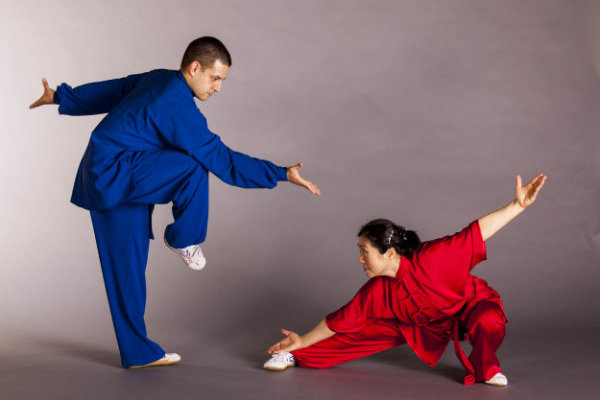
Since the heart is an organ particularly sensitive to stress and emotional excess, cultivating a “good heart” requires cultivating a calm and serene mind. This is why, in addition to acupuncture and pharmacopoeia, we offer teachings in practices such as meditation, qigong, and tai chi.

Our experience and our fifteen years of practice in TCM have allowed us to verify the positive impact of these practices on our Shen.

And since the heart connects us to others, practicing altruism and kindness are highly recommended!

The fear

The fear

It is associated with the Water element in TCM

Fear is part of the palette of human emotions. It manifests when the situation eludes us, when we have, or think we have, no more control. Physiologically, it corresponds to a strong release of adrenaline, resulting in an increase in blood pressure and pulse.

In other words, fear is a consequence of the analysis of danger which allows the subject to flee from it or to fight it. By extension, the term can also designate apprehension linked to unpleasant situations.

There are two types of fear: external fear and internal fear.

  • External fear is a reaction to an external situation that the individual seeks to avoid.
  • Internal fear is an internal fear connected to an often negative emotion (eg, low self-esteem).

Fear takes different forms depending on how an individual feels and describes it. This can range from being cautious to extreme paranoia. Fear therefore includes different emotional and cognitive states including worry, anxiety, terror, horror, panic and fear.

Chinese Medicine and Fear

Les reins

In TCM, fear or anxiety is directly linked to the kidneys. This state, if prolonged or persistent can seriously harm daily life.

In TCM, the lower back is the Palace of the Kidneys. So the kidney void is the root of all low back pain. Most of the time, all the energetic imbalances of the Kidney are manifested, among other things, by pain in the lower back and knees.

In TCM, we talk about the Kidney to speak of the organ made up of a yin kidney and a yang kidney, but also of the whole of the functions of this pair of organ. The Kidney governs birth, growth, development, aging processes and reproduction. It is on him that sexual functions and fertility rest. We owe him the endurance, the will, the energy we have.

The Kidney assumes the energy management of the body and the balance between Yin and Yang. 

The Kidneys also control the bladder and anal sphincters. Fear will cause qi down, causing kidney disease. Therefore intense fear can cause urinary or anal incontinence.

Kidney Void (or Kidney Energy Void)

Kidney deficiency can manifest itself through the following symptoms: weak willpower, dental problems, hair loss, bone fragility, water retention or edema, urinary problems (leakage, incontinence, etc.), hearing loss, etc.

It can be caused by repeated physical exertion, overwork, old age, sexual excess in men, and closely spaced pregnancies.

Kidney Fullness (or Excess Kidney Energy)

In case of excess Kidney energy, a person will experience great recklessness, heightened sexual excitement, night sweats, heat in the soles of the feet and palms of the hands, and insomnia.

How to have strong kidneys

femme qui dort
  • Sleep
    The kidneys, like batteries, recharge between 10 p.m. and 4 a.m. Lack of sleep during these hours inevitably results in a weakened kidney.
  • Eat properly.
    Certain foods strengthen the kidneys such as soy, duck, dried beans, lentils, nuts and dried fruits, oysters, sea shrimp, vegetables or roots (carrot, potato, turnips, etc.), apples, pears.
  • Hydrate properly.
    Drink fluids such as water or unsweetened fruit juices regularly and in reasonable quantities. All drinks not exceeding 1.5 liters on average per day.
  • Move.
    Here we can distinguish two kinds of activities. : intense activities causing a high heart rate, and more meditative activities such as tai qi or qi gong. The latter are highly indicated because they allow the qi to circulate freely, thus protecting the body from external attacks.
  • Avoid chemical drugs.
    See article on drugs harmful to the kidneys

Diabetes: TCM’s solutions

Diabetes: TCM’s solutions

Chinese Medicine solutions


Diabetes is experiencing alarming growth worldwide. A WHO report estimated that 422 million adults were diabetic worldwide in 2014, compared to 108 million in 1980. Cambodia is no exception, with 230,000 cases recorded in 2015. In some regions, the rate of diabetes reaches as high as 10%.

How can this phenomenon be explained? Risk factors are primarily linked to an unhealthy lifestyle: a sedentary lifestyle, lack of physical activity, excess consumption of refined foods, overconsumption of sugar in particular, and alcohol, not to mention emotional factors linked to an overly stressful lifestyle.

10 spoons of sugar in a soda

Femme devant gâteaux

In Cambodia, sugar consumption has reached alarming proportions: the proliferation of sugar-laden sodas, the ubiquitous use of white sugar in cooking, and sweetened condensed milk in coffee and various other drinks.

Drinking a can of soda is equivalent to eating 10 teaspoons of sugar!

However, it is encouraging to see that more and more Khmer people are becoming aware of the damage caused by sugar.

Indeed, the body is designed to assimilate the sugars naturally present in food and does not need additional sugar. Therefore, any additional sugar intake will create imbalances in the overall functioning of our body.

Diabetes is not inevitable

But diabetes is not inevitable! While some have a genetic predisposition, most type 2 diabetics can reverse their disease, or even cure it, by reviewing their lifestyle, diet, exercising, and maintaining a healthy work-rest schedule. Type 1 diabetics can also improve their condition.

A clinical study conducted by Newcastle University and published in Cell Metabolism demonstrated that significant weight loss in type 2 diabetic patients immediately after diagnosis restored insulin production, thereby leading to a cure.

A closer observation showed them that this weight loss led to a reprogramming of pancreatic cells, which returned to normal function. They thus proved that diabetes could be cured, contrary to popular belief.

Xiāo Kè or the syndrome of useless thirst

Diabetes has been known and treated for over 2,000 years by Traditional Chinese Medicine (TCM). In Chinese, diabetes, Xiāo Kè or “unnecessary thirst syndrome,” is identified as a global disharmony, itself linked to a yin deficiency.

To avoid Xiāo Kè, you should refrain from:

  • drinking alcohol,
  • eating sugar, or foods or drinks with added sugar,
  • eating excessively fatty foods (fried foods).

And above all, you must move! Regular and intensive physical exercise is essential to prevent diabetes.

Acupuncture and pharmacopoeia

TCM does not measure blood glucose levels. It applies personalized treatment to each patient after a complete diagnosis. First, palpation of the Chinese pulse, questioning, observation, and palpation of the body are used.

The patient is treated with acupuncture and Chinese pharmacopoeia. This treatment gradually restores the body’s energy balance, allowing the organs to return to their natural, and therefore healthy, functioning.

The more the patient agrees to review their diet and lifestyle, the greater their chances of recovery.

The Chinese medicine doctor may recommend, in particular, the practice of qigong, whose health benefits are well-proven.

Pouls chinois

Le diabète n’est donc pas irrémédiable. Mais mieux vaut encore suivre le précepte de ce grand médecin chinois du 13ème siècle, Zhu Zhenheng : « Entretenir la santé vaut mieux que de traiter la maladie. »

The action of qigong on diabetes

Qigong has been practiced for over 2,000 years in China, particularly for its therapeutic effects. This discipline—when practiced regularly—has a beneficial and regulating effect on the entire metabolism. People with diabetes therefore have every interest in practicing it.

In an article published in 1984, Dr. Zhan Ke Fu recounts his own experience. A diabetic who relied on insulin, he decided to start practicing Tai Ji Qigong. After 15 days of diligent practice, he stopped using insulin. Three months later, his blood sugar and urine glucose levels had returned to normal.

Five other patients participated in an experimental study, practicing Tiao Xi Bu Gong, another style of qigong, every day for three hours. After three months, the results were such that all five were able to stop all their hypoglycemic medications or insulin. During a follow-up six months later, these patients’ blood sugar levels remained normal.

Qigong classes at Essence of Health