
Low back pain
Low back pain (or Yāo tòng) as seen by TCM
The Chinese term yao tong refers to back pain, whether unilateral or bilateral. Low back pain is often encountered in clinical practice. It is not uncommon for this seemingly simple complaint to conceal other complications such as:
- a lumbar disc herniation,
- a lumbar disc protrusion (collapse of the vertebral discs),
- kidney stones,
- spinal osteoarthritis (degeneration of the intervertebral disc).
Sciatica or back pain (particularly in the lower back) affects between 50 and 70% of the population. The origins vary, lasting from a few days in the acute phase to several years. Traditional Chinese medicine links these conditions to the kidneys and bladder.
Low back pain is back pain that originates in the muscles located on either side of the spine (the quadratus lumborum). Spasms of these muscles cause significant pain. This pain begins below the last thoracic vertebra (L1), descends through the buttocks, extending behind the thigh, then behind the knees, and sometimes to the toes.
Less well-known is cruralgia, a pain that focuses on the front of the thighs and outer buttocks and can extend to the front of the knee, shins, and toes.
Both types of pain are often felt on only one side of the body.
Etiology
- Excess of physical activity
- Unsuitable physical activity
- Bad posture (or prolonged position)
- Sudden movement (without respect for joint physiology)
- Exaggerated repetition of a movement
- Heavy loads lifted
- Traumatic injuries
- Lack of physical activity
- Excessive sexual activity
- Pregnancy and childbirth
- Overwork
Clinical signs
- A cold wet wind: this is a pervert that can invade the Bladder meridian. The cold contracts the muscles of the back. Moisture hinders the circulation of Qi and Blood, thus causing obstruction, which is a source of pain.
- Heat-humidity: when pathogenic factors (heat – humidity) penetrate and stagnate in the body, there is a feeling of heaviness.
- The stagnation of Qi and Blood: localized, it causes muscular contractures, and therefore pain.
- Emptiness of the kidneys: this reinforces the impact of the above-mentioned perversions, as the kidneys can no longer nourish and strengthen the back muscles.
Depending on the syndrome, the pain may have different characteristics:
- acute or chronic,
- sensation of cold or heat,
- heaviness,
- more intense during the day or night,
- at rest or in motion,
- tingling, numbness,
- fixed or erratic,
- dull or sharp,
- revived by emotions,
- more intense after effort…
The lumbar region, home of the Kidneys
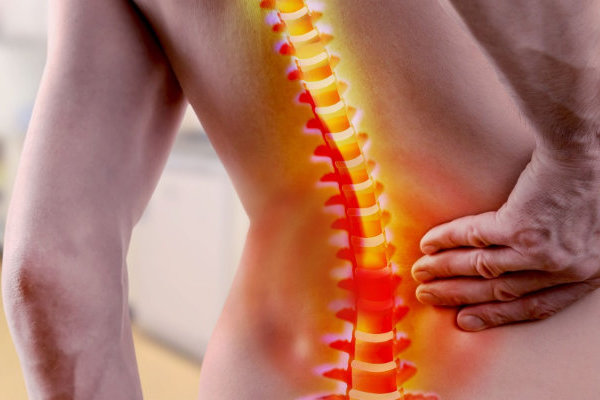
Low back pain is pain in the lumbar region, an area that is connected to the Kidney, Bladder, Governing Vessel and sometimes the Belt Vessel meridians.
According to TCM, the lumbar area is connected to the Kidney. This organ is also coupled to the Bladder. The Bladder meridian is a long meridian that runs down the spine, continues behind the thigh, joins the calf and ends on the side of the foot at the little toe.
“The lumbar region is the home of the Kidneys and the root of the Qi.” Their deficiency promotes the penetration of perverts into the lumbar region. The Zu Tai Yang (Bladder) meridian as well as the Du Mai (Governor) meridian run through the lumbar region. If perverts invade and obstruct these meridians and the Kidneys fail to defend their home, lumbago occurs.
The invasion of external perverts
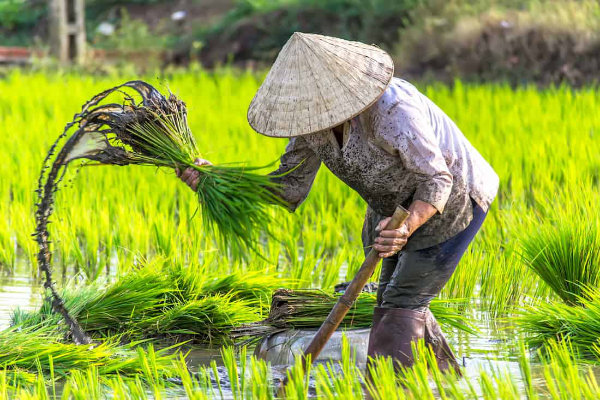
Sweating, living in a cold and humid environment, working in water or in a humid environment, etc. can all make the body susceptible to external perverts such as Wind, Cold, and Damp. If other internal factors are added, such as excessive consumption of hot, spicy, and greasy foods, these perverts can, in a second stage, transform into Damp-heat.
When attacked by these external perverts, the meridians become blocked. Wind is a Yang pervert that often begins in the Yang meridians when it invades the body.
Cold and Damp are Yin perverts, which often begin by attacking the feet and then spread upward.
The latter two do not necessarily cause lower back pain, except in cases of Kidney Yang Deficiency.
If you sweat a lot or work in a cold and humid environment, your body may be prone to these attacks. Wind is primarily responsible because it is a Yang pervert that attacks the Yang meridians, namely the Bladder and Gallbladder meridians.
The attack, however, will remain superficial, mainly affecting muscle tissue.
Mechanical trauma
Lower back pain can develop gradually following trauma to the lumbar vertebrae, such as an accident. It often develops following prolonged muscle tension related to: tension, stress, poor posture, an accident, or carrying excessive weight.
In the event of a sprain or strain, local meridians are affected, leading to Qi stagnation and blood stasis, and consequently pain.
The consequences can be more or less serious, including the displacement of a vertebra or the pelvis.
Without prompt intervention, the body can quickly compensate by correcting posture, thus creating new tension and therefore new pain.
It is then recommended to consult an osteopath or physiotherapist to restore correct posture.
Emotions and Aging

Any intellectual overwork or sexual excess can affect the Kidney organ, draining its energy and thus impacting the lower back. Strong emotions related to the Kidneys, such as fear and anxiety, can trigger delayed lower back pain.
Chronic illness will also consume Qi and Blood, as will aging. Kidney Qi and Yang function to warm and circulate Blood so that it fills the meridians and nourishes muscles, tendons, bones, tissues, etc.
If Qi and Blood are weakened, they will be unable to fulfill this function, which will generate internal cold and a buildup of mucus. As a result, the lower back will receive less warmth and nutrition. This will result, among other things, in lower back pain.
The Kidneys also govern the bones. Weakness in this area can, of course, trigger lower back pain.
If Qi and Blood are weakened, they will not be able to fulfill this function, which will generate internal cold and a buildup of mucus. As a result, the lower back will receive less warmth and nutrition. This will result, among other things, in lower back pain. The Kidneys also govern the bones. Weakness here can, of course, trigger lower back pain.
Therapeutic techniques
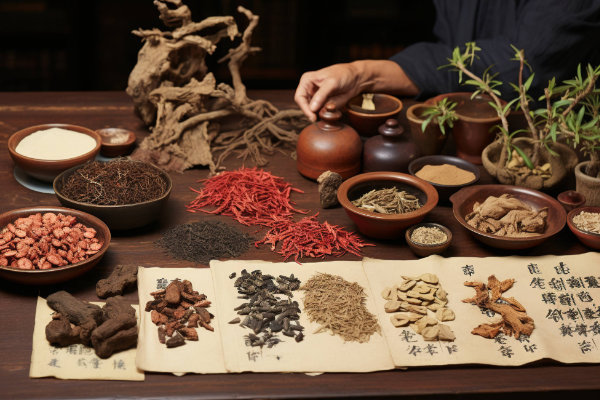
Acupuncture and moxibustion can provide quick and satisfying results. The work involves clearing heat, warming the meridians, and dispelling cold to eliminate perverse conditions. It is also important to regulate Qi and Blood to nourish the Kidneys.
It is important to use Chinese medicine to enhance the work of acupuncture. Qi gong is highly recommended for strengthening and nourishing the kidneys and promoting the circulation of Qi throughout the body.
We also use cupping and Chinese Tuina massage. However, using Chinese medicine is essential.
The duration of treatment depends on the individual’s situation. An acute attack can be relieved in a few sessions. Chronic lower back pain will take longer to heal. The results will be faster and more lasting if the patient makes the appropriate changes in their lifestyle.
Indeed, it is important to adapt your lifestyle (diet, sports activities, etc.) while limiting stress factors.
Osteopathy and exercise
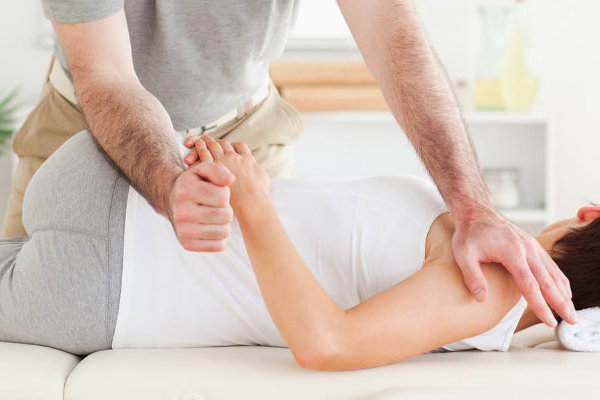
A number of tests should be performed to identify muscle hypertonia or hypotonia, and localized or distal osteoarticular imbalance.
Low back pain can therefore manifest itself as a result of various physical conditions:
- an improperly treated ankle sprain,
- trauma to the knees (ligaments, menisci, etc.),
- a frozen shoulder,
- hypertonic quadratus lumborum (which accentuates lumbar lordosis),
- hypotonic abdominal muscles, etc.
Osteoarticular adjustments should therefore be performed to restore balance, allowing the free circulation of blood and energy, and to relieve pain.
Physical exercises are also recommended to strengthen the back and abs (especially static exercises).