Libido and TCM

Libido and TCM

What a decreased sexual desire reveals

A decreased libido is a sign of physiological dysfunction according to Traditional Chinese Medicine (TCM). Indeed, sexual dysfunction is never an isolated phenomenon. It is a symptom of a systemic imbalance affecting the organs, primarily the Kidney, Liver, and Spleen.

Before considering a treatment strategy, it is essential to establish a clear clinical picture, particularly regarding the genital area. However, in clinical practice, special attention is paid to the Liver and its central role in the mechanics of sexual function. This is often where the initial blockage is located in sexually active patients.

The role of the liver

In Traditional Chinese Medicine (TCM), the Liver stores Blood and governs the tendons; indeed, the corpora cavernosa and the elastic genital tissues fall under the category of “tendons.” Liver Qi stasis, common in contexts of work-related stress or emotional conflict, prevents Blood from fully filling these structures. Clinically, this manifests as a dissociation between libido (which depends on the Heart and Kidney) and mechanical capacity: the patient feels desire, but Qi does not circulate to relax the vessels and allow blood flow.

If the Liver is full of Damp-Heat, the condition worsens with inflammation of the genital tract and impaired ejaculatory control. Understanding this liver dynamic is essential. However, it is also important to consider that when the patient is preoccupied and overthinks, the Spleen becomes the weak link in the energy chain.

The role of the spleen

The Spleen is the source of Qi and Blood production. Excessive thinking, worry, or intense intellectual work injures the Spleen’s Qi, leading to Qi Deficiency. This deficiency results in an inability to sustain sexual function due to a lack of energy.

Even more seriously, this deficiency leads to the pathological formation of internal Dampness. This dampness, heavy and turbid in nature, tends to descend toward the Lower Burner. It then obstructs the orifices and weighs down the genital area, resulting in a loss of sexual responsiveness.

In this case, it is recommended to tonify the Spleen first before addressing the Kidneys. Beyond these factors related to the production and circulation of Qi, it is important to consider heat states that can consume or extinguish the vital flame.

personne en surmenage mental

The role of the kidney

Distinguishing between Cold and Heat in the lower burner is crucial.

A Kidney Yang Deficiency manifests as a genuine internal Cold: here, the Jing (or life essence) is present but deprived of its thermal engine, the Fire of the “Gate of Life” (Ming Men). Without this transformative heat, the Jing remains inert, unable to vaporize into Qi to stimulate erection or warm the uterus.

Conversely, a Kidney Yin Deficiency reflects a depletion of the material and cooling aspect of the Jing. This loss of substance creates Empty Heat, a pathological heat that stems from a lack of Yin (fluids, blood, essence) and not from an excess of external fire (infection or inflammation). Indeed, this Yin is necessary to contain and anchor the Yang, allowing it to float upwards.

Thus, this Kidney Yin deficiency consumes the remaining fluids, causing paradoxical nervous excitability, premature ejaculation, and dryness of the mucous membranes. The practitioner will focus their treatment on preserving and properly mobilizing the Jing.

Physiological cycles according to age

This clinical presentation inevitably evolves with the natural decline of Kidney Jing with age, as described in the Su Wen. Before age 40, pathologies are predominantly Excess (Liver Qi Stasis, Damp-Heat) or mild relative Deficiencies; treatment focuses on dispersing, clearing, and regulating Qi without heavy tonification.

Between 40 and 50, a transitional period when Yang Ming Qi begins to decline, mixed presentations are often observed, combining the onset of Kidney Deficiency with persistent stasis. Therapy must then harmoniously combine moderate tonification and circulation. After age 50, Kidney Deficiency (Yin or Yang) becomes the dominant root syndrome, often complicated by secondary Blood Stasis. This is due to age-related circulatory slowing and a lack of Qi propulsion.

The treatment then requires substantial tonification of the Jing combined with gentle activation of the Blood. Beyond the age of 60, when the Jing is significantly diminished, the approach focuses exclusively on preservation, nourishing the Essence with precious substances and adjusting the Shen to facilitate the acceptance of a sexuality adapted to the new energetic capacities.

To care for one’s libido, one can also practice Qigong, as described in the box below.

The role of the kidney

Distinguishing between Cold and Heat in the lower burner is crucial.

A Kidney Yang Deficiency manifests as a genuine internal Cold: here, the Jing (or life essence) is present but deprived of its thermal engine, the Fire of the “Gate of Life” (Ming Men). Without this transformative heat, the Jing remains inert, unable to vaporize into Qi to stimulate erection or warm the uterus.

Conversely, a Kidney Yin Deficiency reflects a depletion of the material and cooling aspect of the Jing. This loss of substance creates Empty Heat, a pathological heat that stems from a lack of Yin (fluids, blood, essence) and not from an excess of external fire (infection or inflammation). Indeed, this Yin is necessary to contain and anchor the Yang, allowing it to float upwards.

Thus, this Kidney Yin deficiency consumes the remaining fluids, causing paradoxical nervous excitability, premature ejaculation, and dryness of the mucous membranes. The practitioner will focus their treatment on preserving and properly mobilizing the Jing.

Physiological cycles according to age

This clinical presentation inevitably evolves with the natural decline of Kidney Jing with age, as described in the Su Wen. Before age 40, pathologies are predominantly Excess (Liver Qi Stasis, Damp-Heat) or mild relative Deficiencies; treatment focuses on dispersing, clearing, and regulating Qi without heavy tonification.

Between 40 and 50, a transitional period when Yang Ming Qi begins to decline, mixed presentations are often observed, combining the onset of Kidney Deficiency with persistent stasis. Therapy must then harmoniously combine moderate tonification and circulation. After age 50, Kidney Deficiency (Yin or Yang) becomes the dominant root syndrome, often complicated by secondary Blood Stasis. This is due to age-related circulatory slowing and a lack of Qi propulsion.

The treatment then requires substantial tonification of the Jing combined with gentle activation of the Blood. Beyond the age of 60, when the Jing is significantly diminished, the approach focuses exclusively on preservation, nourishing the Essence with precious substances and adjusting the Shen to facilitate the acceptance of a sexuality adapted to the new energetic capacities.

To care for one’s libido, one can also practice Qigong, as described in the box below.

The role of the kidney

Distinguishing between Cold and Heat in the lower burner is crucial.

A Kidney Yang Deficiency manifests as a genuine internal Cold: here, the Jing (or life essence) is present but deprived of its thermal engine, the Fire of the “Gate of Life” (Ming Men). Without this transformative heat, the Jing remains inert, unable to vaporize into Qi to stimulate erection or warm the uterus.

Conversely, a Kidney Yin Deficiency reflects a depletion of the material and cooling aspect of the Jing. This loss of substance creates Empty Heat, a pathological heat that stems from a lack of Yin (fluids, blood, essence) and not from an excess of external fire (infection or inflammation). Indeed, this Yin is necessary to contain and anchor the Yang, allowing it to float upwards.

Thus, this Kidney Yin deficiency consumes the remaining fluids, causing paradoxical nervous excitability, premature ejaculation, and dryness of the mucous membranes. The practitioner will focus their treatment on preserving and properly mobilizing the Jing.

Physiological cycles according to age

This clinical presentation inevitably evolves with the natural decline of Kidney Jing with age, as described in the Su Wen. Before age 40, pathologies are predominantly Excess (Liver Qi Stasis, Damp-Heat) or mild relative Deficiencies; treatment focuses on dispersing, clearing, and regulating Qi without heavy tonification.

Between 40 and 50, a transitional period when Yang Ming Qi begins to decline, mixed presentations are often observed, combining the onset of Kidney Deficiency with persistent stasis. Therapy must then harmoniously combine moderate tonification and circulation. After age 50, Kidney Deficiency (Yin or Yang) becomes the dominant root syndrome, often complicated by secondary Blood Stasis. This is due to age-related circulatory slowing and a lack of Qi propulsion.

The treatment then requires substantial tonification of the Jing combined with gentle activation of the Blood. Beyond the age of 60, when the Jing is significantly diminished, the approach focuses exclusively on preservation, nourishing the Essence with precious substances and adjusting the Shen to facilitate the acceptance of a sexuality adapted to the new energetic capacities.

To care for one’s libido, one can also practice Qigong, as described in the box below.

Self-treatment through Qigong

Qi gong pour la libido

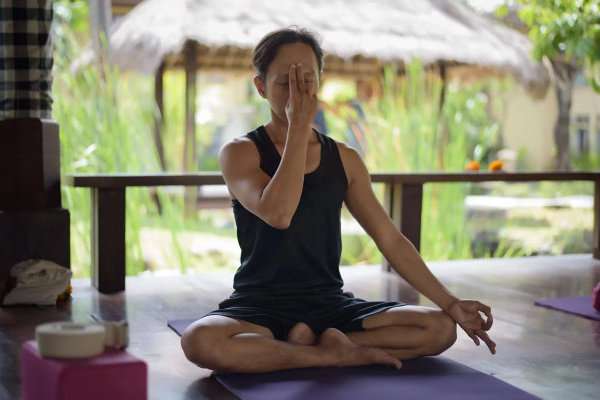
In Traditional Chinese Medicine, Qigong is not simply a supplement but constitutes approximately 40 to 50% of the sexual revitalization process, particularly after the age of 60. The remaining 50 to 60% is divided between diet, lifestyle, respecting the circadian rhythm, and, if necessary, appropriate herbal medicine.

Why this high percentage? Because after 60, the body assimilates nutrients less efficiently, and herbs act more slowly. Qigong is the only mechanism capable of actively generating Qi and circulating it rapidly to blocked areas. It acts as an internal engine that neither diet nor herbs alone can replace.

Training should not exceed 40% of your energy capacity. You should never sweat profusely or become breathless, because “sweat is the fluid of the Heart.” Thus, excessive sweating injures the Yang and disperses the Shen, negating sexual benefits.

Remember: consistency is more important than duration. It is better to practice for 20 minutes every day than for 2 hours once a week.

Mindfulness

Mindfulness

A living presence at the heart of the experience

Mindfulness is experiencing a surge in popularity today. How can we explain this phenomenon? In our Traditional Medicine practice, we are seeing more and more patients complaining of anxiety and sleep disorders. Their Shen (spirit) is troubled by an incessant stream of thoughts, their bodies are tense from chronic stress, and their Qi (vital energy) is not flowing harmoniously. And we observe, year after year, that this trend is not improving. Thus, mindfulness is not a modern fad, but a vital need, a profound response to an era where everything conspires to uproot us from the present moment.

We have seen many lives transformed when patients begin to cultivate this mindful presence. It aligns so naturally with the principles of Taoism that we have made it our daily practice: listening to our sensations and emotions, acting without forcing. Let’s explore this art of living together—simple in theory, but demanding in practice, especially when our external environment bombards us with distractions.

What is mindfulness?

What is mindfulness? Imagine this: you’re sitting, your breath is flowing, and suddenly a thought pops up: “Oh, I forgot about that appointment…” Instead of diving into it, you let it pass like a cloud in the sky. That’s mindfulness: a kind, non-judgmental attention to what is here, now—the sensation in your stomach, the warmth in your hands, the sound of rain outside…

No rigid concentration, no forced relaxation. Just an observation: “This is what is,” without judgment or analysis. In our practice, we see this quality as a form of subtle observation of the Shen (spirit) and Qi. When a patient begins to perceive their tensions without immediately trying to push them away, the Qi already flows more freely.

Deep roots in Taoism

"Connais-toi toi-même", temple d'Apollon

In early Buddhism, sati (mindfulness) is the ability to observe the body, sensations, mind, and phenomena without judgment, remaining clear-headed in the face of bodily, sensory, and mental manifestations.

In Taoism, wu wei, this often misunderstood “non-action,” is not laziness. It is acting in perfect harmony with the Tao, without the intervention of the ego. To achieve this, one must first perceive the natural rhythms—the flow of Qi, openings, and blockages. We practice this subtle perception with our patients. It is this perception that allows us, in particular, to sense where Qi stagnates, where it lacks fluidity.

The Huangdi Neijing, the foundational text of Chinese Medicine, states it clearly: perfect health arises from harmony with the seasons, emotions, heaven, and earth. “Know thyself”—this Socratic invitation resonates with this approach to mindfulness. Indeed, this state of being open to oneself and to the present moment is a path to knowledge, even wisdom.

Training mindfulness

So, how do you practice mindfulness? As practitioners of Traditional Chinese Medicine (TCM), in addition to our treatments, we often guide our patients toward simple practices that enhance the work done during sessions. Here are a few:

  • Conscious breathing: Sit down and observe your breath as it is. This is the most reliable anchor. It calms the agitated Shen and tonifies Lung Qi.
  • Body scan: Mentally scan your body, area by area. Note any tension, tingling, heaviness… without correcting it. This refines awareness of the meridians.
  • Observing thoughts: Watch them like leaves carried by a river. They come, transform, and go. The less you cling to them, the less the Liver stagnates.
  • Conscious movement: Slow walking, Tai Chi, or basic Qigong. Focus your attention on the contact of your feet with the ground, relaxation, the swinging of your arms, and the flow of Qi in your limbs.

Practice daily

But the real magic happens when you integrate this mindfulness into your daily life. That’s when it becomes powerful. After a few weeks, our patients report: “I cooked while being truly present… and being relaxed allowed me to be incredibly faster.”

Practice mindful eating. Look at the colors of your food, savor the aromas, taste each bite fully… Also, learn to identify hunger and satiety signals. At the same time, you’ll be contributing to the preservation of your Spleen and Stomach.

Experiment during a conversation. Truly listen to the other person—without preparing your response, without judging. Remain aware of your own breath, the warmth rising and falling within you, and any emotions that may arise. Misunderstandings diminish, relationships become more peaceful, and Liver Qi flows more freely.

écoute attentive

The benefits of mindfulness

Numerous studies from the National Institutes of Health (NIH), the American Psychological Association (APA), the Mayo Clinic, and Johns Hopkins confirm what we observe clinically: mindfulness reduces chronic stress, alleviates anxiety and rumination, and improves emotional regulation.

Two programs have been particularly effective:

  • Mindfulness-Based Stress Reduction (MBSR) by Jon Kabat-Zinn, excellent for managing chronic pain and daily stress.
  • Mindfulness-Based Cognitive Therapy (MBCT), highly effective in preventing depressive relapses in those who have already experienced several.

The observed effects include: improved sleep, reduced muscle tension, and a heightened awareness of bodily signals (cold, heat, fatigue, etc.). These effects are moderate but lasting—and they complement our treatments with acupuncture, Tuina massage, or traditional Chinese medicine.

Let’s be honest: mindfulness is not a miracle cure. It’s not the end of difficulties. Life remains what it is: joys, sorrows, unexpected events. But with mindfulness, we navigate them differently—with greater clarity, stability, acceptance, and therefore, gentleness toward ourselves and others.

And you? Ready to focus your attention on the present moment, day after day? The true treasure—your health, your inner peace—is already there, waiting for you to notice it.

Tell us in the comments or during a consultation: what small, mindful action will you try this week?

When inner quality shapes the act

cheffe en cuisine

Mindfulness is not simply about observing what is. When it is stable and embodied, it allows us to introduce a clear intention into our actions, without tension or excessive willpower. Intention is not a repetitive thought or a mental wish; it is a silent orientation of mind and heart that permeates the gesture.

In Ayurveda, it is said that cooking calmly, with attention and kindness, transforms the subtle quality of food. The same dish, prepared hastily or in a fit of anger, does not nourish in the same way. It is not the ingredient that changes, but the inner state of the person performing the action. Mindfulness makes this state perceptible and therefore adjustable.

In medical practice, this dimension is crucial. In our practice, we are fully present with our patients. Thus, we do not provide care mechanically. For example, when we insert acupuncture needles into a woman experiencing fertility difficulties, our action will be performed with full awareness. Thus, in silence, we set a clear intention: that the flow of hormones will regulate and that the patient will open herself to fertility again. This intention is not spoken aloud; it discreetly accompanies the act.

Mindfulness prevents the intention from becoming a rigid will. It keeps it flexible, attuned, and respectful of the rhythms of life.

The stomach meridian

The stomach meridian

Exploration of the Earth element and the Stomach

Imagine a village nestled in a fertile valley, where the earth nourishes every tree, every house, every life. In Traditional Chinese Medicine (TCM), the Earth element embodies this nourishing force. Associated with the Spleen (Pi) and the Stomach (Wei), it transforms food into Qi, grounds the body, and calms the mind. Earth thus symbolizes stability, benevolence, and the capacity to digest, both literally and figuratively, life’s experiences.

But when the Earth trembles, harmony falters. The Stomach, guardian of transformation, and the Spleen, master of nutrient transport, can become depleted. The TCM practitioner will then focus on the Stomach meridian, Zú Yangmíng Wei Jing (足阳明胃经), to rebalance the Earth element.

This yang meridian of the foot, running along the anterolateral aspect of the body, influences far more than digestion. It relates to vital energy, immunity, and impacts emotions such as anxiety and rumination. Let’s explore its path, its imbalances, and its therapeutic secrets.

An energetic path

The Stomach meridian, Zú Yángmíng Wèi Jīng, begins at the Chéngqì point (ST1), located below the eye, descends along the face, crosses the chest and abdomen, and terminates at the Lìduì point (ST45) on the second toe.

Zú (足) means “of the foot,” indicating its belonging to the yang meridians that terminate in the feet. Yángmíng (阳明) designates its energetic position, a strong yang energy on the surface, on the anterolateral aspect. Wèi Jīng (胃经) connects it to the stomach.

Its 45 bilateral points bear evocative names, such as Zúsānlǐ (ST36), “three distances from the foot,” or Tiānshū (ST25), “celestial pivot.” These names are not arbitrary: they reveal the position or energetic function of the point. The table below lists some key points on the stomach meridian, along with their symbolism and therapeutic indications.

#

Pinyin

Chinese

Translation

Symbolic function / name meaning

Therapeutic indications (digestive / emotional)

1

Chéngqì

承泣

Receive the tears

Nourishes the eyes, disperses tears and visual disorders

Calms Shen disturbed by emotions, frees eye tension linked to stress

10

Shuǐtú

水突

Prominence of water

Opens the throat, calms cough and neck swellings

Harmonizes emotional throat (tight throat), calms fear expressed by voice

13

Qìhù

气户

Door of Qi

Circulates chest Qi, calms thoracic oppression

Opens chest, releases emotional tension from worry

25

Tiānshū

天枢

Celestial pivot

Mu point of LI, regulates intestinal transit

Emotional constipation or stress diarrhea

36

Zúsānlǐ

足三里

Three li on the leg

Tonifies Qi and Blood, strengthens vitality

Tonifies Qi, supports mood, stabilizes emotions, regulates appetite

40

Fēnglóng

丰隆

Prosperous abundance

Transforms phlegm, clarifies spirit

Clears mental phlegm, clarifies thoughts, calms anxiety, OCD

41

Jiěxī

解溪

Separation valley

Clears Stomach heat, regulates digestive fire

Balances extreme emotions (anger, mental agitation)

42

Chōngyáng

冲阳

Yang surge

Yuan point, tonifies meridian Yang

Revitalizes, restores joy and enthusiasm, treats depression from Qi deficiency

An imbalance in the stomach meridian manifests itself through various symptoms, reflecting its systemic influence.

Symptoms of a Stomach Imbalance

An imbalanced stomach meridian can cause digestive problems: bloating, epigastric pain, nausea, and acid reflux. But its impact extends further. Here are the main signs:

  • Digestive: heartburn, excessive or absent appetite, belching, and a feeling of heaviness.
  • Emotional: chronic worry, overthinking, and difficulty processing events.
  • Physical (non-digestive): fatigue, toothache, sinusitis, sore throat, and heavy legs.
  • Energetic: deficiency of qi and exhaustion after meals.

These symptoms indicate an imbalance of the Earth element, often linked to qi stagnation, excess dampness (shi), or pathogenic heat. The practitioner then selects specific points to restore harmony.

When the stomach tells a story

The stomach meridian plays a role in a variety of conditions, from digestive issues to neurological pain. Through a clinical example, let’s see how the Traditional Chinese Medicine (TCM) practitioner is guided toward treatment by analyzing the characteristic syndromes of the stomach meridian.

Observation of signs such as:

  1. Gum pain and swelling, sensitive teeth, constipation, intense thirst.
  2. Stagnation of Qi and blood in the maxillofacial region:

A locked jaw

Case study – Mei, 45 years old

Mei, 45, suffers from dental pain and jaw tension. She grinds her teeth at night, a sign of accumulated stress.

Signs: Dental pain, jaw tension, temporomandibular joint (TMJ) dysfunction.

Stagnation of Qi and Blood is often due to trauma or bruxism. The practitioner will interpret this situation as a manifestation of Liver Fire or Internal Wind, which agitates the tendons and muscles, blocking Qi in the jaw area.

They will then use points such as Xiàguān (the 7th point of the stomach) and Jiáchē (the 6th point of the stomach) to release local stagnation, and Dìcāng (the 5th point of the stomach) to relax the facial muscles.

Note that Xiàguān (ST7) is essential for relieving jaw pain by releasing blocked qi in this area.

In conclusion

The stomach meridian is much more than just a player in digestion. It is the guardian of the Earth element, influencing qi, immunity, and emotional stability. By stimulating points such as Zúsānlǐ, Nèitíng, Xiàguān, or Sìbái, the practitioner treats a variety of conditions: fatigue, dental pain, digestive disorders, and facial edema. Supported by a suitable diet and qigong, the Earth element regains its harmony.

Practices to support the Earth element

respiration abdominale

To strengthen the Earth element and the stomach meridian, complementary practices amplify the effects of acupuncture.

Diet: Nourishing the Earth

Diet is a cornerstone of Traditional Chinese Medicine (TCM). Here are the recommendations:

  • Warm or cooked foods: Soups, cooked vegetables (carrots, sweet potatoes), grains (rice, millet).
  • Avoid dampness: Reduce dairy products, refined sugars, and raw foods.
  • Regular meals: Eat at fixed times, without overeating, to support the stomach.

A warm, easily digestible pumpkin soup tonifies the spleen and stomach, ideal for a patient suffering from digestive heaviness.

Qi Gong: Harmonizing energy

Qi Gong strengthens the Earth element. Key exercises include:

  • Bear pose: Gentle rocking to stimulate digestion.
  • Abdominal breathing: Inhale while expanding the abdomen to harmonize the qi.
  • Tree Pose: Grounding the feet to stabilize the Earth.

Ten minutes a day is enough to reduce stagnation and tonify energy.

Herbs and Supplements

Herbs such as shān yào (Chinese yam) or huáng qí (astragalus) support the spleen and stomach. Their prescription should be tailored by a qualified practitioner.

Huang Di: The Yellow Emperor

Huang Di: The Yellow Emperor

The father of Chinese Medicine

The Yellow Emperor, Huang Di (黃帝), occupies a unique place in the Chinese imagination and collective memory. He is also a key figure in the origins of Traditional Chinese Medicine (TCM). Indeed, tradition attributes to him the authorship of the Huangdi Neijing (黃帝內經, The Inner Canon of the Yellow Emperor), the foundational text of TCM.

A semi-legendary figure, he is believed to have been born in the 27th century BCE and to have reigned for approximately a century. More than just a sovereign, he represents a sage, an inventor, and a spiritual guide. His virtues make him a role model in many respects and an inspiring figure.

A civilizing hero

According to ancient chronicles, such as the Shiji of Sima Qian (1st century BCE), Huang Di was born in the Youxiong Plain under the name Xuanyuan (軒轅). From a young age, he distinguished himself by his extraordinary intelligence, insatiable curiosity, and innate sense of governance.

His reign is associated with the settlement of populations, the establishment of stable political structures, and numerous inventions. Traditions attribute to him, in particular, the institution of the calendar, the domestication of animals, the use of boats, the introduction of ritual music, and the invention of writing, thanks to his minister Cang Jie.

Thus, Huang Di is not only a political leader but also a civilizing hero. He is said to have “united the scattered tribes under one sky” and that “through his virtue, he fostered harmony among humankind.”

The contribution to Chinese medicine

l'empereur jaune, Huang Di

Huang Di is considered the author—or the inspiration—of the Huangdi Neijing (黃帝內經, Yellow Emperor’s Inner Classic), a work that remains a key reference for contemporary Chinese medicine. Although it is unlikely that he actually wrote this text, tradition attributes its authorship to him, a testament to the moral and intellectual authority he held.

The Neijing takes the form of dialogues between Huang Di, the Yellow Emperor, and his physician, Qi Bo. The emperor asks questions, the physician answers; together, they explore the nature of the human body, the causes of illness, and methods of prevention.

The text (see box) lays the foundations of Chinese medical thought: the balance between Yin and Yang, the circulation of Qi (vital energy), the role of the five elements (wood, fire, earth, metal, water), and the intimate connection between humankind and nature: “Humankind is born from the Earth, depends on Heaven, and is governed by the Dao.”

According to him, the physician’s role is primarily to prevent illnesses from arising: “Treating an illness that has already manifested is like digging a well when one is thirsty, or forging weapons after a war has begun.” (Neijing, Suwen, chap. 2). This preventative approach, still central to Traditional Chinese Medicine, reveals the pragmatic and visionary intelligence attributed to the Yellow Emperor.

Virtues and personality

Huang Di is described as a model of wisdom, temperance, and virtue. He is a sovereign who listens to his advisors, respects the laws of nature, and governs by example. He follows the path of the “golden mean”: neither excess nor deficiency, but a constant pursuit of harmony. In the Neijing, he emphasizes the importance of living in accordance with the seasons: “In spring and summer, nourish growth; in autumn and winter, protect contemplation. He who follows the path of the seasons avoids illness.”

Thus, Huang Di embodies an innate ecological awareness, based on a profound respect for the cycles of life and the interdependence between humankind and its environment. On a moral level, he is the archetype of the wise and benevolent sovereign, at the service of his people. He governs not by force, but by virtue. He is “the son of Heaven who enlightens mankind without dominating them.”

Heritage and posterity

Huang Di’s influence has endured through the ages. He remains a key figure in Chinese political, philosophical, and medical thought. His veneration continues to this day, notably in Huangling, Shaanxi Province, where annual ceremonies honor his memory.

His legacy is also reflected in the central role of health in Chinese culture. By placing prevention, balance, and natural regulation at the heart of his teachings, Huang Di inspired not only medicine but also the philosophy of daily life: diet, breathing, and energy practices such as qigong.

Huang Di thus embodies a timeless ideal: that of a sovereign who unites science, wisdom, and spirituality. He reminds us that governing, like healing, consists above all in maintaining balance and respecting the laws of life: “The wise person observes Heaven and Earth, understands the energies, and protects life.”

Thus, the figure of Huang Di continues to profoundly influence Chinese culture today. He is a symbol of the unity of the Chinese people and of ancestral wisdom. His model continues to inform contemporary Chinese medical and philosophical thought.

The Huangdi Neijing, a masterpiece of TCM

Huangdi Neijing

The Huangdi Neijing (黃帝內經, Yellow Emperor’s Inner Classic) is considered the foundational text of Traditional Chinese Medicine. Likely composed between the 3rd and 1st centuries BCE, it is divided into two main parts: the Suwen (素問, Simple Questions) and the Lingshu (靈樞, Spiritual Pivot). The Suwen addresses major medical theories: Yin-Yang, the Five Elements, Qi, the causes of disease, prevention, and dietetics. The Lingshu focuses more on practical matters, particularly acupuncture, detailing the meridians and energy points.

The dialogue format between Huangdi and his physician Qibo brings the text to life: the emperor asks pertinent, sometimes naive, questions, to which Qibo responds with clear and philosophical explanations. This pedagogical style reflects the idea that knowledge is the result of exchange, not imposition.

Among its key principles is the idea that health depends on a dynamic harmony between humankind and nature. Thus, “human beings are microcosms reflecting the macrocosm,” and their imbalances represent a disruption of natural cycles.

Even today, the Neijing serves as a reference for practitioners of Traditional Chinese Medicine (TCM). It is not only a medical manual but also a philosophical treatise, where science, spirituality, and empirical observation converge. As a famous phrase from the Suwen emphasizes: “The wise person does not treat the disease, but rather what precedes it.”

Spirituality and TCM

Spirituality and TCM

Living in rhythm with the cycles of nature

Chinese medicine, through its holistic approach to health, naturally integrates the spiritual dimension of the individual and of all living beings. Furthermore, spirituality is rooted in the Dao—or Tao—also known as “the Way.”

The Dao is the “mother of the world,” the principle that gives rise to all that exists, the Breath that flows through all things. The Taijitu (symbol of yin and yang) represents it as a symbol of unity beyond the yin-yang duality.

According to Traditional Chinese Medicine (TCM), the human being exists between Heaven (the spiritual world, yang) and Earth (the material world, yin). Their breath—Qi—draws from these two polarities to manifest. Thus, their health depends on a proper balance between these two poles: material (Earth) and spiritual (Heaven).

Beyond the mind and the material

To live spiritually is to connect with a universal reality that transcends matter and mind. According to Traditional Chinese Medicine (TCM), living spiritually means aligning oneself with the rhythms of life so that the body, mind, and environment communicate and harmonize. It is about learning to inhabit the world with true balance.

Spirituality is not confined to dogma or to a ritual detached from the world. Consequently, it is an intimate experience that each person has in contact with the elements that surround them. This sensory perception gives rise to it. With the morning light, it breathes, listens to the rain on the rooftops, and follows the course of the seasons.

Indeed, the Huangdi Neijing (Yellow Emperor’s Inner Classic), a major text of TCM, reminds us that health—both physical and spiritual—is interwoven with the seasons. It invites us to “regulate the mind according to the Qi of the four seasons.” This regulation consists of an art of living where everything is rhythm. The wise man adjusts his life to this music, and the mind is clarified.

The seasons as an inner guide

In spring, the fresh air and the buds ready to burst open invite us to renewal.

The connected soul dares to dream and imagine new projects. Without forcing anything, while following the natural flow, it moves forward gently. Life awakens like a plant seeking the light; the heart opens, the gaze widens, ready to forge a new path.

Then comes the vibrant and warm season, a time for sharing, for simple joy that warms without burning. The days lengthen, encounters multiply. Moreover, it is now about being present, welcoming others, and laughing together.

We forge connections, we savor the light. It is a time to radiate, to connect with the world with a smile.

Towards the end of summer, the energies calm, giving way to a softer light and fresher air. The leaves fall from the trees. This season teaches us to let go of what is no longer needed. It’s time to cultivate the art of choosing, keeping only what’s essential. Our breathing slows, and we gain clarity. It’s time to make space by letting go of the superfluous.

Bourgeons au printemps illustrant la spiritualité en médecine traditionnelle chinoise".

The seasonal cycle finally closes. Everything slows down. The cold encourages contemplation. One conserves energy and turns inward. One doesn’t speak much, but reflects and dreams in secret. The time has come to rest, to gently prepare for next spring; beneath the frozen earth, life silently prepares itself.

The Five Movements or Five Elements

In Traditional Chinese Medicine (TCM), the seasons are linked to the Five Elements (Wǔ Xíng) — Wood, Fire, Earth, Metal, and Water — which give rhythm to life. Wood grows, Fire diffuses, Earth integrates, Metal clarifies, and Water preserves.

This dynamic does not describe a static cosmos; it helps us understand change. Thus, in our inner life, we recognize these rhythms.

Indeed, there is a time for: Emergence (Wood). You can then express yourself and act (Fire). Then gather yourself and wait (Earth). Next comes pruning (Metal). Finally, self-preservation (Water).

To achieve this, we must refine our senses and develop subtle listening. Thus, with practice, the mind ceases to control, giving way to gestures and postures adapted to each situation. This is the state of mind, the attitude that underlies the concept of Wu Wei, or “non-action.”

Nourishing life and soul

Ancient Chinese thought views humans as a living link. Qi traverses space, circulates in the winds, animates plants, nourishes animals, and also flows through our meridians.

"Homme méditant au pied d’un arbre en harmonie avec la spiritualité et MTC".

The classic formula of Heaven-Humanity-Earth underscores this interdependence: Heaven inspires, Earth nourishes, and Humanity integrates and reflects. When this triangulation is disrupted, something is obscured; when it is harmonized, we rediscover a tranquil clarity and a contagious radiance.

Chinese medicine has given a name to these interactions: Yǎngshēng, or “nourishing life.” This TCM discipline is an art of living spiritually. It connects rest, diet, breathing, movement, emotional balance, and inner cultivation. It relies on exercises and proposes a lifestyle: quality sleep, listening to one’s true hunger cues, sun exposure, walking, and Qi practice.

Yang Sheng promises neither performance nor eternal youth. It offers a joyful simplicity. It prefers regularity to feats of strength and nuance to excess. For example, it teaches you to feel the difference between the fatigue that calls for rest and the fatigue that calls for a walk, between the hunger of the body and the need to eat to distract yourself.

It offers a spirituality that doesn’t oppose daily life but harmonizes with it. The soul is not separate from the world; it learns from it. Harmony isn’t imposed, it arises when the conditions are right.

An aesthetics of presence

Finally, spirituality in Traditional Chinese Medicine (TCM) appears as an aesthetic of presence. It cultivates a sensitive awareness of the quality of the moment, of how the air flows through the room, of how a voice resonates with the listener. It prefers transitions to ruptures, nuances to slogans, and precision to excess. It is as wary of sterile willpower as it is of resigned passivity. It seeks a living balance: enough tension to move forward, enough relaxation to endure.

By accepting to live in this Earth-Sky balance, the individual ceases to struggle against the world and chooses to work with it. Then, life takes on a simpler course; the gaze shines with a calm joy; actions become more effective. The mind is serene, and the heart radiates. One experiences true well-being and optimal health.

Health and spirituality

qi gong bord de mer

Traditional Chinese Medicine (TCM) practices are rooted in this philosophy. Therefore, the practitioner treats the patient not as a mere body, but as a complex being with emotions and a mind.

In its diagnosis, TCM identifies energetic imbalances. These can have a purely physical origin (poor diet, toxins, adverse weather conditions, etc.). However, they very often have an emotional, or even spiritual, origin.

Indeed, if an individual lives a life that doesn’t suit them, where they are not in harmony with their true self, this will generate imbalances. And over time, illnesses will develop.

For example, someone who is bored at work, or someone who experiences excessive pressure or harassment, cannot maintain good health. The same is true for someone who lives in a toxic relationship environment, or someone who chooses to conform to external pressures that contradict their true nature. Sooner or later, they will lose their health.

Chinese medicine, by restoring balance, allows for the overall regulation of the body, emotions, and mind. Acupuncture, like herbal medicine, are natural methods that strengthen and stimulate the patient’s connection with Nature and with their own inner nature. They guide the individual toward a path of harmony.

Qi Gong and Tai Ji Quan teach relaxation, conscious fluidity, presence in movement, and strength without rigidity. Energetic nutrition doesn’t moralize about what’s on the plate; it situates it within the natural rhythm of life and the changing seasons.