The breast milk

The breast milk

A Living Transformation of Blood

Mothers have been breastfeeding their children since the dawn of time. And yet, the formula milk industry has diverted many mothers from this essential practice for a child’s healthy development. Indeed, mothers transform their blood into a perfectly balanced food that the food industry has never been able to replicate.

Today, 47% of infants worldwide are exclusively breastfed. This means that 53% of babies receive formula or other supplements before the age of six months. However, breast milk, resulting from the living transformation of blood, constitutes the supremely harmonious food for infants. In fact, it is enriched with an adaptive intelligence that the child’s saliva helps to reveal. Formula milks cannot compete. Being inherently uniform, they cannot adapt to a child’s condition at any given moment.

The postpartum period according to TCM

According to the principles of the Huangdi Neijing, a classic of Traditional Chinese Medicine (TCM), breast milk (rǔzhī 乳汁) results from the transformation of Qi and Blood by the mother’s Spleen and Stomach. The Blood, nourished by the essences of food and postnatal Qi, becomes in the breastfeeding woman a warm, vibrant substance, perfectly suited to the still-weak Spleen of the infant.

As soon as the placenta is delivered, the postpartum period (产后期 chǎn hòu qī) begins. The mother’s body is then deficient in Qi and Blood. The pores of her skin and the meridians are more open. This makes her particularly vulnerable to external factors (cold, wind, overwork). This phase, often called the “golden month,” or Zuò Yuè Zi (坐月子), lasts for 30 to 40 days. During this phase, it is essential to nourish the Blood, strengthen the Spleen and Stomach, and restore internal harmony so that the transformation of Blood into breast milk occurs optimally.

As emphasized in the Fù Qīngzhǔ Nǚ Kē – as well as other texts – the immediate postpartum period is indeed marked by a significant consumption of Qi and Blood. “A woman’s milk comes from the transformation of Qi and Blood. Below, it becomes menstruation; above, it becomes milk,” states the Jǐngyuè Quánshū. Thus, milk and menstruation share the same source. According to the Tài Chǎn Xīn Fǎ: “In a postpartum woman, if the blood of the Chong and Ren organs is abundant and the Qi of the Spleen and Stomach is strong, then the milk production is sufficient.”

Diagnosis of imbalances

A lack of milk (quē rǔ) occurs primarily due to Qi/Blood deficiency or obstruction. According to clinical observations in Chinese hospitals, the causes include excessive blood loss, unresolved emotions, overconsumption of fatty foods, or a generally unbalanced lifestyle.

Points of differentiation:

  • Clear milk and soft, unswollen breasts often reflect Qi and Blood deficiency.
  • Thick milk and swollen, hard breasts often indicate Liver Qi stagnation or obstruction by phlegm-dampness.

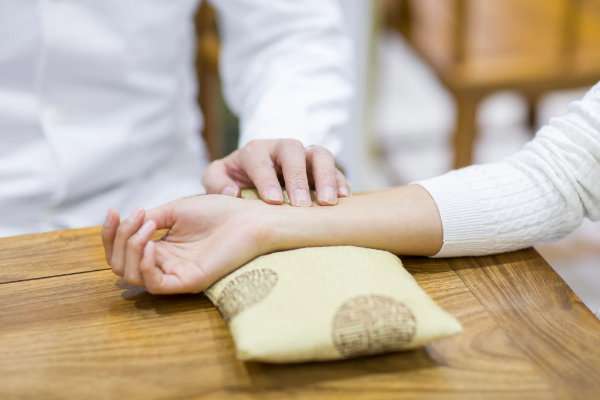
The practitioner notices a pale tongue and a thready pulse, typically indicating deficiency. The breast belongs to the Stomach Yang Ming (阳明), and the nipple to the Liver Jue Yin (厥阴). The Spleen-Stomach is the source of Qi and Blood generation, while the Liver ensures their free circulation.

bébé au sein

Solutions from Chinese medicine

Diet plays a central role during the “golden month.” Warm, mild, and easily digestible foods are favored, as they strengthen the Spleen and produce high-quality Blood.

For Qi and Blood deficiency, several specific formulas exist that tonify and aid in milk production, and promote the circulation of Liver Qi in cases of stagnation.

Practitioners recommend professional breast massage and acupuncture to restore the generation and smooth flow of Qi and Blood. Early initiation of breastfeeding naturally stimulates this process.

The emotional impact and the mother-child bond

The state of the mother’s Liver, Heart, and Spleen directly influences the quality of her milk. Anger or frustration leads to stagnation; calmness and kindness promote abundant and harmonious milk production. This transmission through milk strengthens the mother-child bond and cultivates inner balance from the earliest months.

Breast milk, derived from the mother’s subtle essences, is easily digested by the child’s immature Spleen. This supports the child’s harmonious development without overloading them.

By cultivating rest, a suitable diet, gentle Qi circulation, and emotional management through wu wei (spiritual guidance), the mother preserves the vital transformation of the Blood. This protects the child from early stagnation and lays the foundation for robust health.

This path, described in the classics and more relevant than ever, highlights the superiority of a vibrant and adaptive diet over uniform and impersonal preparations. She encourages every mother to find her inner balance in order to give her child the best possible start in life.

A diet adapted to lactation

bol de congee

Diet plays a vital role in the postpartum period, as discussed above. Here are some foods that support lactation.

  • Basic foods: rice, millet, oats, red dates (hóng zǎo), longans (lóng yǎn ròu), lotus seeds, and Chinese yam (shān yào).
  • Nourishing broths and soups: chicken or pig’s foot broth with mild herbs (Huáng Qí, Dāng Guī in appropriate quantities), carp or light-colored fish soup. Pig’s foot is particularly beneficial for nourishing the Blood and promoting circulation to the breasts.
  • Vegetables and roots: carrots, sweet potatoes, squash, turnips, and cooked spinach. Avoid raw and cold vegetables, which can harm the Spleen.
  • Suitable proteins: well-cooked eggs, poultry, a small amount of warm beef or lamb, and white fish.

Examples of preparations: rice congee with red dates and Huang Qi (a type of spice); pig’s foot soup with peanuts and black soybeans; warm infusion of fresh ginger and red dates.

During this period, it is necessary to avoid or limit certain foods:

  • raw foods, cold foods;
  • cold dairy products, iced drinks ;
  • chili peppers, coffee, alcohol, fried foods, and processed foods that generate Dampness or Heat, blocking milk production.

Dietary recommendations are always adapted to the individual’s constitution (tongue, pulse). In cases of Liver stasis related to tense emotions, foods that promote circulation, such as celery, are gradually added.

Libido and TCM

Libido and TCM

What a decreased sexual desire reveals

A decreased libido is a sign of physiological dysfunction according to Traditional Chinese Medicine (TCM). Indeed, sexual dysfunction is never an isolated phenomenon. It is a symptom of a systemic imbalance affecting the organs, primarily the Kidney, Liver, and Spleen.

Before considering a treatment strategy, it is essential to establish a clear clinical picture, particularly regarding the genital area. However, in clinical practice, special attention is paid to the Liver and its central role in the mechanics of sexual function. This is often where the initial blockage is located in sexually active patients.

The role of the liver

In Traditional Chinese Medicine (TCM), the Liver stores Blood and governs the tendons; indeed, the corpora cavernosa and the elastic genital tissues fall under the category of “tendons.” Liver Qi stasis, common in contexts of work-related stress or emotional conflict, prevents Blood from fully filling these structures. Clinically, this manifests as a dissociation between libido (which depends on the Heart and Kidney) and mechanical capacity: the patient feels desire, but Qi does not circulate to relax the vessels and allow blood flow.

If the Liver is full of Damp-Heat, the condition worsens with inflammation of the genital tract and impaired ejaculatory control. Understanding this liver dynamic is essential. However, it is also important to consider that when the patient is preoccupied and overthinks, the Spleen becomes the weak link in the energy chain.

The role of the spleen

The Spleen is the source of Qi and Blood production. Excessive thinking, worry, or intense intellectual work injures the Spleen’s Qi, leading to Qi Deficiency. This deficiency results in an inability to sustain sexual function due to a lack of energy.

Even more seriously, this deficiency leads to the pathological formation of internal Dampness. This dampness, heavy and turbid in nature, tends to descend toward the Lower Burner. It then obstructs the orifices and weighs down the genital area, resulting in a loss of sexual responsiveness.

In this case, it is recommended to tonify the Spleen first before addressing the Kidneys. Beyond these factors related to the production and circulation of Qi, it is important to consider heat states that can consume or extinguish the vital flame.

personne en surmenage mental

The role of the kidney

Distinguishing between Cold and Heat in the lower burner is crucial.

A Kidney Yang Deficiency manifests as a genuine internal Cold: here, the Jing (or life essence) is present but deprived of its thermal engine, the Fire of the “Gate of Life” (Ming Men). Without this transformative heat, the Jing remains inert, unable to vaporize into Qi to stimulate erection or warm the uterus.

Conversely, a Kidney Yin Deficiency reflects a depletion of the material and cooling aspect of the Jing. This loss of substance creates Empty Heat, a pathological heat that stems from a lack of Yin (fluids, blood, essence) and not from an excess of external fire (infection or inflammation). Indeed, this Yin is necessary to contain and anchor the Yang, allowing it to float upwards.

Thus, this Kidney Yin deficiency consumes the remaining fluids, causing paradoxical nervous excitability, premature ejaculation, and dryness of the mucous membranes. The practitioner will focus their treatment on preserving and properly mobilizing the Jing.

Physiological cycles according to age

This clinical presentation inevitably evolves with the natural decline of Kidney Jing with age, as described in the Su Wen. Before age 40, pathologies are predominantly Excess (Liver Qi Stasis, Damp-Heat) or mild relative Deficiencies; treatment focuses on dispersing, clearing, and regulating Qi without heavy tonification.

Between 40 and 50, a transitional period when Yang Ming Qi begins to decline, mixed presentations are often observed, combining the onset of Kidney Deficiency with persistent stasis. Therapy must then harmoniously combine moderate tonification and circulation. After age 50, Kidney Deficiency (Yin or Yang) becomes the dominant root syndrome, often complicated by secondary Blood Stasis. This is due to age-related circulatory slowing and a lack of Qi propulsion.

The treatment then requires substantial tonification of the Jing combined with gentle activation of the Blood. Beyond the age of 60, when the Jing is significantly diminished, the approach focuses exclusively on preservation, nourishing the Essence with precious substances and adjusting the Shen to facilitate the acceptance of a sexuality adapted to the new energetic capacities.

To care for one’s libido, one can also practice Qigong, as described in the box below.

The role of the kidney

Distinguishing between Cold and Heat in the lower burner is crucial.

A Kidney Yang Deficiency manifests as a genuine internal Cold: here, the Jing (or life essence) is present but deprived of its thermal engine, the Fire of the “Gate of Life” (Ming Men). Without this transformative heat, the Jing remains inert, unable to vaporize into Qi to stimulate erection or warm the uterus.

Conversely, a Kidney Yin Deficiency reflects a depletion of the material and cooling aspect of the Jing. This loss of substance creates Empty Heat, a pathological heat that stems from a lack of Yin (fluids, blood, essence) and not from an excess of external fire (infection or inflammation). Indeed, this Yin is necessary to contain and anchor the Yang, allowing it to float upwards.

Thus, this Kidney Yin deficiency consumes the remaining fluids, causing paradoxical nervous excitability, premature ejaculation, and dryness of the mucous membranes. The practitioner will focus their treatment on preserving and properly mobilizing the Jing.

Physiological cycles according to age

This clinical presentation inevitably evolves with the natural decline of Kidney Jing with age, as described in the Su Wen. Before age 40, pathologies are predominantly Excess (Liver Qi Stasis, Damp-Heat) or mild relative Deficiencies; treatment focuses on dispersing, clearing, and regulating Qi without heavy tonification.

Between 40 and 50, a transitional period when Yang Ming Qi begins to decline, mixed presentations are often observed, combining the onset of Kidney Deficiency with persistent stasis. Therapy must then harmoniously combine moderate tonification and circulation. After age 50, Kidney Deficiency (Yin or Yang) becomes the dominant root syndrome, often complicated by secondary Blood Stasis. This is due to age-related circulatory slowing and a lack of Qi propulsion.

The treatment then requires substantial tonification of the Jing combined with gentle activation of the Blood. Beyond the age of 60, when the Jing is significantly diminished, the approach focuses exclusively on preservation, nourishing the Essence with precious substances and adjusting the Shen to facilitate the acceptance of a sexuality adapted to the new energetic capacities.

To care for one’s libido, one can also practice Qigong, as described in the box below.

The role of the kidney

Distinguishing between Cold and Heat in the lower burner is crucial.

A Kidney Yang Deficiency manifests as a genuine internal Cold: here, the Jing (or life essence) is present but deprived of its thermal engine, the Fire of the “Gate of Life” (Ming Men). Without this transformative heat, the Jing remains inert, unable to vaporize into Qi to stimulate erection or warm the uterus.

Conversely, a Kidney Yin Deficiency reflects a depletion of the material and cooling aspect of the Jing. This loss of substance creates Empty Heat, a pathological heat that stems from a lack of Yin (fluids, blood, essence) and not from an excess of external fire (infection or inflammation). Indeed, this Yin is necessary to contain and anchor the Yang, allowing it to float upwards.

Thus, this Kidney Yin deficiency consumes the remaining fluids, causing paradoxical nervous excitability, premature ejaculation, and dryness of the mucous membranes. The practitioner will focus their treatment on preserving and properly mobilizing the Jing.

Physiological cycles according to age

This clinical presentation inevitably evolves with the natural decline of Kidney Jing with age, as described in the Su Wen. Before age 40, pathologies are predominantly Excess (Liver Qi Stasis, Damp-Heat) or mild relative Deficiencies; treatment focuses on dispersing, clearing, and regulating Qi without heavy tonification.

Between 40 and 50, a transitional period when Yang Ming Qi begins to decline, mixed presentations are often observed, combining the onset of Kidney Deficiency with persistent stasis. Therapy must then harmoniously combine moderate tonification and circulation. After age 50, Kidney Deficiency (Yin or Yang) becomes the dominant root syndrome, often complicated by secondary Blood Stasis. This is due to age-related circulatory slowing and a lack of Qi propulsion.

The treatment then requires substantial tonification of the Jing combined with gentle activation of the Blood. Beyond the age of 60, when the Jing is significantly diminished, the approach focuses exclusively on preservation, nourishing the Essence with precious substances and adjusting the Shen to facilitate the acceptance of a sexuality adapted to the new energetic capacities.

To care for one’s libido, one can also practice Qigong, as described in the box below.

Self-treatment through Qigong

Qi gong pour la libido

In Traditional Chinese Medicine, Qigong is not simply a supplement but constitutes approximately 40 to 50% of the sexual revitalization process, particularly after the age of 60. The remaining 50 to 60% is divided between diet, lifestyle, respecting the circadian rhythm, and, if necessary, appropriate herbal medicine.

Why this high percentage? Because after 60, the body assimilates nutrients less efficiently, and herbs act more slowly. Qigong is the only mechanism capable of actively generating Qi and circulating it rapidly to blocked areas. It acts as an internal engine that neither diet nor herbs alone can replace.

Training should not exceed 40% of your energy capacity. You should never sweat profusely or become breathless, because “sweat is the fluid of the Heart.” Thus, excessive sweating injures the Yang and disperses the Shen, negating sexual benefits.

Remember: consistency is more important than duration. It is better to practice for 20 minutes every day than for 2 hours once a week.

The stomach meridian

The stomach meridian

Exploration of the Earth element and the Stomach

Imagine a village nestled in a fertile valley, where the earth nourishes every tree, every house, every life. In Traditional Chinese Medicine (TCM), the Earth element embodies this nourishing force. Associated with the Spleen (Pi) and the Stomach (Wei), it transforms food into Qi, grounds the body, and calms the mind. Earth thus symbolizes stability, benevolence, and the capacity to digest, both literally and figuratively, life’s experiences.

But when the Earth trembles, harmony falters. The Stomach, guardian of transformation, and the Spleen, master of nutrient transport, can become depleted. The TCM practitioner will then focus on the Stomach meridian, Zú Yangmíng Wei Jing (足阳明胃经), to rebalance the Earth element.

This yang meridian of the foot, running along the anterolateral aspect of the body, influences far more than digestion. It relates to vital energy, immunity, and impacts emotions such as anxiety and rumination. Let’s explore its path, its imbalances, and its therapeutic secrets.

An energetic path

The Stomach meridian, Zú Yángmíng Wèi Jīng, begins at the Chéngqì point (ST1), located below the eye, descends along the face, crosses the chest and abdomen, and terminates at the Lìduì point (ST45) on the second toe.

Zú (足) means “of the foot,” indicating its belonging to the yang meridians that terminate in the feet. Yángmíng (阳明) designates its energetic position, a strong yang energy on the surface, on the anterolateral aspect. Wèi Jīng (胃经) connects it to the stomach.

Its 45 bilateral points bear evocative names, such as Zúsānlǐ (ST36), “three distances from the foot,” or Tiānshū (ST25), “celestial pivot.” These names are not arbitrary: they reveal the position or energetic function of the point. The table below lists some key points on the stomach meridian, along with their symbolism and therapeutic indications.

#

Pinyin

Chinese

Translation

Symbolic function / name meaning

Therapeutic indications (digestive / emotional)

1

Chéngqì

承泣

Receive the tears

Nourishes the eyes, disperses tears and visual disorders

Calms Shen disturbed by emotions, frees eye tension linked to stress

10

Shuǐtú

水突

Prominence of water

Opens the throat, calms cough and neck swellings

Harmonizes emotional throat (tight throat), calms fear expressed by voice

13

Qìhù

气户

Door of Qi

Circulates chest Qi, calms thoracic oppression

Opens chest, releases emotional tension from worry

25

Tiānshū

天枢

Celestial pivot

Mu point of LI, regulates intestinal transit

Emotional constipation or stress diarrhea

36

Zúsānlǐ

足三里

Three li on the leg

Tonifies Qi and Blood, strengthens vitality

Tonifies Qi, supports mood, stabilizes emotions, regulates appetite

40

Fēnglóng

丰隆

Prosperous abundance

Transforms phlegm, clarifies spirit

Clears mental phlegm, clarifies thoughts, calms anxiety, OCD

41

Jiěxī

解溪

Separation valley

Clears Stomach heat, regulates digestive fire

Balances extreme emotions (anger, mental agitation)

42

Chōngyáng

冲阳

Yang surge

Yuan point, tonifies meridian Yang

Revitalizes, restores joy and enthusiasm, treats depression from Qi deficiency

An imbalance in the stomach meridian manifests itself through various symptoms, reflecting its systemic influence.

Symptoms of a Stomach Imbalance

An imbalanced stomach meridian can cause digestive problems: bloating, epigastric pain, nausea, and acid reflux. But its impact extends further. Here are the main signs:

  • Digestive: heartburn, excessive or absent appetite, belching, and a feeling of heaviness.
  • Emotional: chronic worry, overthinking, and difficulty processing events.
  • Physical (non-digestive): fatigue, toothache, sinusitis, sore throat, and heavy legs.
  • Energetic: deficiency of qi and exhaustion after meals.

These symptoms indicate an imbalance of the Earth element, often linked to qi stagnation, excess dampness (shi), or pathogenic heat. The practitioner then selects specific points to restore harmony.

When the stomach tells a story

The stomach meridian plays a role in a variety of conditions, from digestive issues to neurological pain. Through a clinical example, let’s see how the Traditional Chinese Medicine (TCM) practitioner is guided toward treatment by analyzing the characteristic syndromes of the stomach meridian.

Observation of signs such as:

  1. Gum pain and swelling, sensitive teeth, constipation, intense thirst.
  2. Stagnation of Qi and blood in the maxillofacial region:

A locked jaw

Case study – Mei, 45 years old

Mei, 45, suffers from dental pain and jaw tension. She grinds her teeth at night, a sign of accumulated stress.

Signs: Dental pain, jaw tension, temporomandibular joint (TMJ) dysfunction.

Stagnation of Qi and Blood is often due to trauma or bruxism. The practitioner will interpret this situation as a manifestation of Liver Fire or Internal Wind, which agitates the tendons and muscles, blocking Qi in the jaw area.

They will then use points such as Xiàguān (the 7th point of the stomach) and Jiáchē (the 6th point of the stomach) to release local stagnation, and Dìcāng (the 5th point of the stomach) to relax the facial muscles.

Note that Xiàguān (ST7) is essential for relieving jaw pain by releasing blocked qi in this area.

In conclusion

The stomach meridian is much more than just a player in digestion. It is the guardian of the Earth element, influencing qi, immunity, and emotional stability. By stimulating points such as Zúsānlǐ, Nèitíng, Xiàguān, or Sìbái, the practitioner treats a variety of conditions: fatigue, dental pain, digestive disorders, and facial edema. Supported by a suitable diet and qigong, the Earth element regains its harmony.

Practices to support the Earth element

respiration abdominale

To strengthen the Earth element and the stomach meridian, complementary practices amplify the effects of acupuncture.

Diet: Nourishing the Earth

Diet is a cornerstone of Traditional Chinese Medicine (TCM). Here are the recommendations:

  • Warm or cooked foods: Soups, cooked vegetables (carrots, sweet potatoes), grains (rice, millet).
  • Avoid dampness: Reduce dairy products, refined sugars, and raw foods.
  • Regular meals: Eat at fixed times, without overeating, to support the stomach.

A warm, easily digestible pumpkin soup tonifies the spleen and stomach, ideal for a patient suffering from digestive heaviness.

Qi Gong: Harmonizing energy

Qi Gong strengthens the Earth element. Key exercises include:

  • Bear pose: Gentle rocking to stimulate digestion.
  • Abdominal breathing: Inhale while expanding the abdomen to harmonize the qi.
  • Tree Pose: Grounding the feet to stabilize the Earth.

Ten minutes a day is enough to reduce stagnation and tonify energy.

Herbs and Supplements

Herbs such as shān yào (Chinese yam) or huáng qí (astragalus) support the spleen and stomach. Their prescription should be tailored by a qualified practitioner.