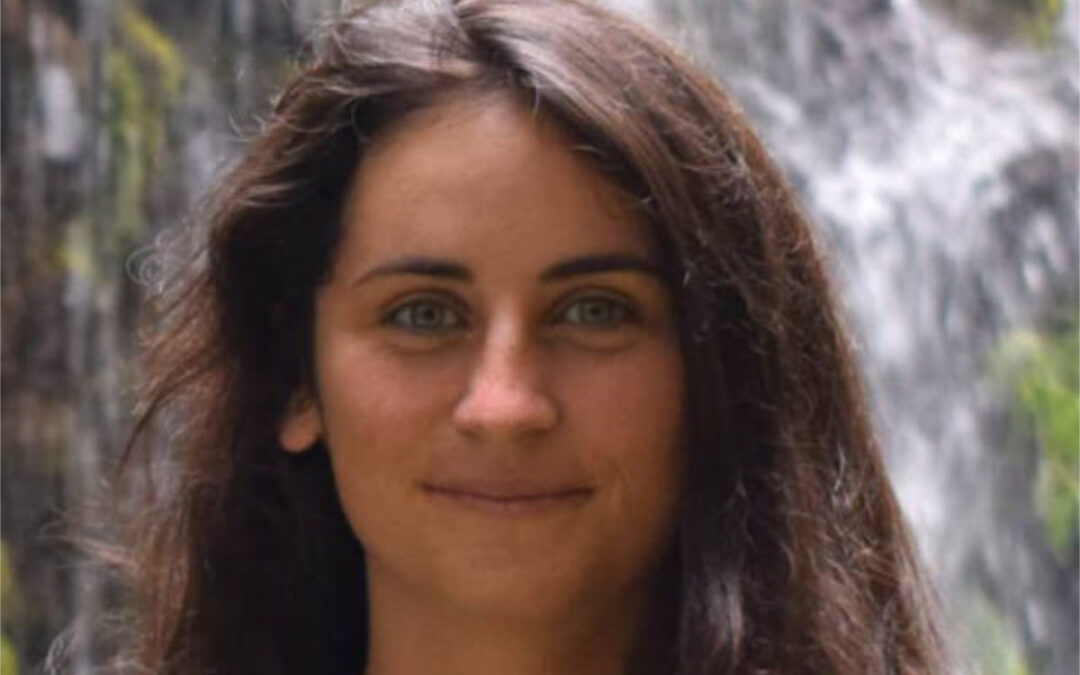
Mariéva Gruffat
Passionate about osteopathy
Mariéva Gruffat grew up in an environment centered on respect for human beings and their interaction with nature. She learned to observe and listen at a very early age from her mother, a horticulture teacher. With her father, the director of an organic produce cooperative, she developed her sense of vital energies.
As she grew older, “helping people” became increasingly important to Mariéva. She therefore chose to pursue a bachelor’s degree in the social sector, which she supplemented with training in psychology. She understood the influence of emotions on behavior, posture, and sometimes even pain. She then sought a model of care that connected the body and mind.
Holistic medicine seemed most appropriate to her because it respects the patient’s integrity through the use of natural methods. She therefore chose osteopathy, a therapy that allows her to use her hands, already full of vital energy. When she was little, her mother told her she had magic fingers.
Training at the Andrew Taylor Still Academy in Lyon
Marius Gruffat studied at the Andrew Taylor Still Academy, an osteopathy school in Lyon, France, where the emphasis was on the humanistic aspect of osteopathy and individualized student support. A great adventure began for her! From her first year, she learned to develop the sensitivity of her hands through listening and touch. Little by little, she became familiar with the various theories of the human being and the cosmos.
She perfected her techniques and engaged in various clinical experiences both inside and outside of school. For example, she participated in sporting events with physical therapists; she also spent several months attending a class at the Lyon Conservatory of Music, working with a team of several osteopaths.
Her passion for her profession took her to Senegal for a humanitarian mission, where she met other osteopaths, who introduced her to other techniques that broadened her scope of practice.
Teamwork
At 26, she chose to continue her journey in Cambodia. “Practicing osteopathy in Cambodia is a way for me to combine my passion with discovering other cultures,” explains Mariéva, who enjoys combining travel and work.
“As an osteopathy student, I had a plan to work as part of a team,” explains Mariéva, who is now seeing this project come to fruition with the collaboration within Essence de Santé. There are many similarities between Chinese medicine and osteopathy. Both are holistic therapies aimed at restoring balance and restoring the body’s capacity for self-healing and full health.
What is osteopathy?
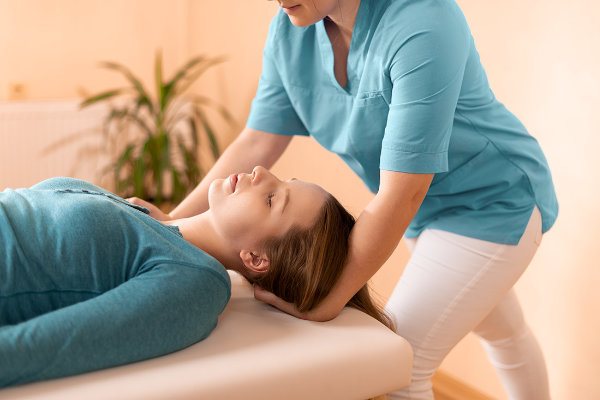
Osteopathy is a therapeutic approach that helps the body regain its adaptive capacity and full mobility by acting on tissues (muscles, tendons, bones, ligaments, arteries, etc.) whose balance has been disrupted by accidents, physical, or psychological trauma.
Osteopathy has a very broad scope. It can treat lower back, neck, and sciatic pain, as well as digestive disorders such as chronic constipation; sleep disorders, anxiety, migraines, and sinusitis. And many more…
For athletes, musicians, or singers, regular follow-up can prevent injuries and relieve certain pains. Osteopathy is particularly useful for treating women during pregnancy, after childbirth, and for their infants.
Different techniques can be used depending on the differentiated needs of each person. “I always favor treatment that listens to the patient and uses tissue techniques, or more commonly known as gentle techniques without cracking,” explains Mariéva Gruffat.