The power of humility

The power of humility

A virtue with multiple benefits

Humility is often scorned, considered a weakness. Indeed, our contemporary society tends to value everything that enhances our appearance, at the expense of authenticity.

Yet, in all the great spiritual traditions, humility is considered an essential virtue. It is the foundation upon which all true growth rests. For humility does not diminish the individual: it liberates them. It is a source of inner harmony and therefore of health.

Knowing your limits

Humility is first and foremost about recognizing one’s own limitations, being aware of both one’s strengths and weaknesses. It allows us to face reality head-on, ceasing to delude ourselves. This inner posture brings a precious flexibility, like that of bamboo. Indeed, bamboo, which bends, is stronger than oak, which resists. Thus, where arrogance rigidifies, humility allows us to remain relaxed, to adapt, and not break in the face of adversity. It places the individual in an attitude of listening and receptivity.

This quality aligns with the principle of non-action, or Wu Wei. It is not about being passive, but about respecting the natural flow of things and ceasing to try to control everything. For living in harmony with reality, rather than fighting against it, brings profound peace.

But practicing humility is not always easy. In everyday life, the ego resists: the need to be right, to control, to validate oneself.

Marc, 52, a senior executive accustomed to being in control of every situation, lived in a state of constant tension. Insomnia, irritability, and interpersonal conflicts were the visible consequences. It was only by embarking on a journey of self-discovery that he perceived the limitations of this approach. Gradually, he learned to listen more, to acknowledge his mistakes, and to truly delegate. “The day I accepted that I couldn’t control everything, my body relaxed,” he recounts.

Humility and balance in Chinese medicine

acupuncture to relieve stress

Indeed, the need for control generates tension, frustration, and stress. It keeps the body in a constant state of alert. According to Traditional Chinese Medicine (TCM), this tension and frustration are associated with stagnation of Liver Qi.

The Liver governs the free flow of Qi; when it is constricted, excess pressure rises, generating irritability, muscle tension, and insomnia. Mental agitation, on the other hand, affects the Heart, the residence of the Shen (spirit).

Conversely, humility fosters letting go. It allows us to accept what is beyond our control, thus reducing internal conflicts.

By allowing a release of these rigid control mechanisms, the practice of humility promotes a smoother flow of Qi. This results in improved sleep, more stable digestion, and emotional calm. Acupuncture is particularly valuable in supporting this process. It helps to circulate Liver Qi, relieve stagnation, and calm Heart Shen.

Regular sessions thus help the body regain greater flexibility.

Abandon the pursuit of performance

Humility is accepting who we are without comparing ourselves to others or worrying about their judgment. It’s letting go of competition and the pursuit of performance. Because, once again, these attitudes are a source of unnecessary tension. They distance individuals from their deepest truth and prevent them from navigating life in a relaxed and harmonious way.

Sophie, 38, involved in numerous practices, was seeking to “progress” and reach a certain level. Despite her efforts, she felt stuck. A simple remark from her teacher sparked something: “You’re trying to become spiritual. Just be yourself, without trying to impress anyone.” By abandoning this quest for performance, she discovered a new simplicity: “It was from the moment I stopped wanting to be advanced that I truly began to understand.”

Thus, humility is a silent, almost invisible, yet profoundly structuring force. Lao Tzu expresses this beautifully in the Tao Te Ching: “All streams flow to the sea, for it is lower than they. It is through its humility that it reigns supreme over the waters.”

This image illustrates the paradoxical power of humility: it is by placing oneself at the bottom that one becomes capable of embracing everything else and rediscovering a profound harmony with the natural flow of life.

Humility is not renunciation. It is a profound wisdom that allows humankind to find its place in the natural order of things.

Cultivating humility on a daily basis
cheffe en cuisine

How can we cultivate this quality in everyday life? It involves simple, repeated practices, to be carried out with consistency and patience. Because transformation takes time. Here are a few avenues to explore:

  • Acknowledge your mistakes without justifying yourself;
  • Truly listen, without trying to dominate the conversation or prepare your response;
  • Accept that you don’t know everything and thus open yourself up to learning;
  • Act and do good without expecting recognition or reward;
  • Observe your ego: identify the moments when you seek to be right, to shine, to dominate;
  • Remember your human condition: we are all limited, mortal, and learning.

Little by little, these adjustments transform our way of being. They establish a more stable peace, greater clarity, and more harmonious relationships.

They bring us closer to a state of harmony. Thus, our energy balance is restored, our qi flows smoothly, and our health improves.

Mindfulness

Mindfulness

A living presence at the heart of the experience

Mindfulness is experiencing a surge in popularity today. How can we explain this phenomenon? In our Traditional Medicine practice, we are seeing more and more patients complaining of anxiety and sleep disorders. Their Shen (spirit) is troubled by an incessant stream of thoughts, their bodies are tense from chronic stress, and their Qi (vital energy) is not flowing harmoniously. And we observe, year after year, that this trend is not improving. Thus, mindfulness is not a modern fad, but a vital need, a profound response to an era where everything conspires to uproot us from the present moment.

We have seen many lives transformed when patients begin to cultivate this mindful presence. It aligns so naturally with the principles of Taoism that we have made it our daily practice: listening to our sensations and emotions, acting without forcing. Let’s explore this art of living together—simple in theory, but demanding in practice, especially when our external environment bombards us with distractions.

What is mindfulness?

What is mindfulness? Imagine this: you’re sitting, your breath is flowing, and suddenly a thought pops up: “Oh, I forgot about that appointment…” Instead of diving into it, you let it pass like a cloud in the sky. That’s mindfulness: a kind, non-judgmental attention to what is here, now—the sensation in your stomach, the warmth in your hands, the sound of rain outside…

No rigid concentration, no forced relaxation. Just an observation: “This is what is,” without judgment or analysis. In our practice, we see this quality as a form of subtle observation of the Shen (spirit) and Qi. When a patient begins to perceive their tensions without immediately trying to push them away, the Qi already flows more freely.

Deep roots in Taoism

"Connais-toi toi-même", temple d'Apollon

In early Buddhism, sati (mindfulness) is the ability to observe the body, sensations, mind, and phenomena without judgment, remaining clear-headed in the face of bodily, sensory, and mental manifestations.

In Taoism, wu wei, this often misunderstood “non-action,” is not laziness. It is acting in perfect harmony with the Tao, without the intervention of the ego. To achieve this, one must first perceive the natural rhythms—the flow of Qi, openings, and blockages. We practice this subtle perception with our patients. It is this perception that allows us, in particular, to sense where Qi stagnates, where it lacks fluidity.

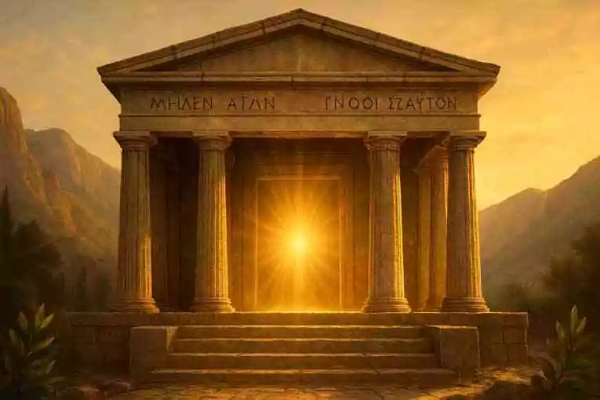
The Huangdi Neijing, the foundational text of Chinese Medicine, states it clearly: perfect health arises from harmony with the seasons, emotions, heaven, and earth. “Know thyself”—this Socratic invitation resonates with this approach to mindfulness. Indeed, this state of being open to oneself and to the present moment is a path to knowledge, even wisdom.

Training mindfulness

So, how do you practice mindfulness? As practitioners of Traditional Chinese Medicine (TCM), in addition to our treatments, we often guide our patients toward simple practices that enhance the work done during sessions. Here are a few:

  • Conscious breathing: Sit down and observe your breath as it is. This is the most reliable anchor. It calms the agitated Shen and tonifies Lung Qi.
  • Body scan: Mentally scan your body, area by area. Note any tension, tingling, heaviness… without correcting it. This refines awareness of the meridians.
  • Observing thoughts: Watch them like leaves carried by a river. They come, transform, and go. The less you cling to them, the less the Liver stagnates.
  • Conscious movement: Slow walking, Tai Chi, or basic Qigong. Focus your attention on the contact of your feet with the ground, relaxation, the swinging of your arms, and the flow of Qi in your limbs.

Practice daily

But the real magic happens when you integrate this mindfulness into your daily life. That’s when it becomes powerful. After a few weeks, our patients report: “I cooked while being truly present… and being relaxed allowed me to be incredibly faster.”

Practice mindful eating. Look at the colors of your food, savor the aromas, taste each bite fully… Also, learn to identify hunger and satiety signals. At the same time, you’ll be contributing to the preservation of your Spleen and Stomach.

Experiment during a conversation. Truly listen to the other person—without preparing your response, without judging. Remain aware of your own breath, the warmth rising and falling within you, and any emotions that may arise. Misunderstandings diminish, relationships become more peaceful, and Liver Qi flows more freely.

écoute attentive

The benefits of mindfulness

Numerous studies from the National Institutes of Health (NIH), the American Psychological Association (APA), the Mayo Clinic, and Johns Hopkins confirm what we observe clinically: mindfulness reduces chronic stress, alleviates anxiety and rumination, and improves emotional regulation.

Two programs have been particularly effective:

  • Mindfulness-Based Stress Reduction (MBSR) by Jon Kabat-Zinn, excellent for managing chronic pain and daily stress.
  • Mindfulness-Based Cognitive Therapy (MBCT), highly effective in preventing depressive relapses in those who have already experienced several.

The observed effects include: improved sleep, reduced muscle tension, and a heightened awareness of bodily signals (cold, heat, fatigue, etc.). These effects are moderate but lasting—and they complement our treatments with acupuncture, Tuina massage, or traditional Chinese medicine.

Let’s be honest: mindfulness is not a miracle cure. It’s not the end of difficulties. Life remains what it is: joys, sorrows, unexpected events. But with mindfulness, we navigate them differently—with greater clarity, stability, acceptance, and therefore, gentleness toward ourselves and others.

And you? Ready to focus your attention on the present moment, day after day? The true treasure—your health, your inner peace—is already there, waiting for you to notice it.

Tell us in the comments or during a consultation: what small, mindful action will you try this week?

When inner quality shapes the act

cheffe en cuisine

Mindfulness is not simply about observing what is. When it is stable and embodied, it allows us to introduce a clear intention into our actions, without tension or excessive willpower. Intention is not a repetitive thought or a mental wish; it is a silent orientation of mind and heart that permeates the gesture.

In Ayurveda, it is said that cooking calmly, with attention and kindness, transforms the subtle quality of food. The same dish, prepared hastily or in a fit of anger, does not nourish in the same way. It is not the ingredient that changes, but the inner state of the person performing the action. Mindfulness makes this state perceptible and therefore adjustable.

In medical practice, this dimension is crucial. In our practice, we are fully present with our patients. Thus, we do not provide care mechanically. For example, when we insert acupuncture needles into a woman experiencing fertility difficulties, our action will be performed with full awareness. Thus, in silence, we set a clear intention: that the flow of hormones will regulate and that the patient will open herself to fertility again. This intention is not spoken aloud; it discreetly accompanies the act.

Mindfulness prevents the intention from becoming a rigid will. It keeps it flexible, attuned, and respectful of the rhythms of life.

Spirituality and TCM

Spirituality and TCM

Living in rhythm with the cycles of nature

Chinese medicine, through its holistic approach to health, naturally integrates the spiritual dimension of the individual and of all living beings. Furthermore, spirituality is rooted in the Dao—or Tao—also known as “the Way.”

The Dao is the “mother of the world,” the principle that gives rise to all that exists, the Breath that flows through all things. The Taijitu (symbol of yin and yang) represents it as a symbol of unity beyond the yin-yang duality.

According to Traditional Chinese Medicine (TCM), the human being exists between Heaven (the spiritual world, yang) and Earth (the material world, yin). Their breath—Qi—draws from these two polarities to manifest. Thus, their health depends on a proper balance between these two poles: material (Earth) and spiritual (Heaven).

Beyond the mind and the material

To live spiritually is to connect with a universal reality that transcends matter and mind. According to Traditional Chinese Medicine (TCM), living spiritually means aligning oneself with the rhythms of life so that the body, mind, and environment communicate and harmonize. It is about learning to inhabit the world with true balance.

Spirituality is not confined to dogma or to a ritual detached from the world. Consequently, it is an intimate experience that each person has in contact with the elements that surround them. This sensory perception gives rise to it. With the morning light, it breathes, listens to the rain on the rooftops, and follows the course of the seasons.

Indeed, the Huangdi Neijing (Yellow Emperor’s Inner Classic), a major text of TCM, reminds us that health—both physical and spiritual—is interwoven with the seasons. It invites us to “regulate the mind according to the Qi of the four seasons.” This regulation consists of an art of living where everything is rhythm. The wise man adjusts his life to this music, and the mind is clarified.

The seasons as an inner guide

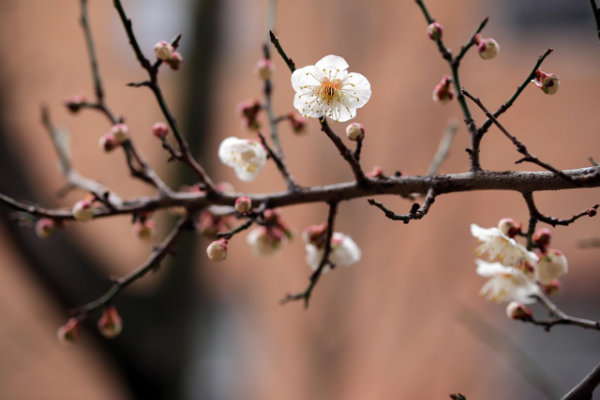
In spring, the fresh air and the buds ready to burst open invite us to renewal.

The connected soul dares to dream and imagine new projects. Without forcing anything, while following the natural flow, it moves forward gently. Life awakens like a plant seeking the light; the heart opens, the gaze widens, ready to forge a new path.

Then comes the vibrant and warm season, a time for sharing, for simple joy that warms without burning. The days lengthen, encounters multiply. Moreover, it is now about being present, welcoming others, and laughing together.

We forge connections, we savor the light. It is a time to radiate, to connect with the world with a smile.

Towards the end of summer, the energies calm, giving way to a softer light and fresher air. The leaves fall from the trees. This season teaches us to let go of what is no longer needed. It’s time to cultivate the art of choosing, keeping only what’s essential. Our breathing slows, and we gain clarity. It’s time to make space by letting go of the superfluous.

Bourgeons au printemps illustrant la spiritualité en médecine traditionnelle chinoise".

The seasonal cycle finally closes. Everything slows down. The cold encourages contemplation. One conserves energy and turns inward. One doesn’t speak much, but reflects and dreams in secret. The time has come to rest, to gently prepare for next spring; beneath the frozen earth, life silently prepares itself.

The Five Movements or Five Elements

In Traditional Chinese Medicine (TCM), the seasons are linked to the Five Elements (Wǔ Xíng) — Wood, Fire, Earth, Metal, and Water — which give rhythm to life. Wood grows, Fire diffuses, Earth integrates, Metal clarifies, and Water preserves.

This dynamic does not describe a static cosmos; it helps us understand change. Thus, in our inner life, we recognize these rhythms.

Indeed, there is a time for: Emergence (Wood). You can then express yourself and act (Fire). Then gather yourself and wait (Earth). Next comes pruning (Metal). Finally, self-preservation (Water).

To achieve this, we must refine our senses and develop subtle listening. Thus, with practice, the mind ceases to control, giving way to gestures and postures adapted to each situation. This is the state of mind, the attitude that underlies the concept of Wu Wei, or “non-action.”

Nourishing life and soul

Ancient Chinese thought views humans as a living link. Qi traverses space, circulates in the winds, animates plants, nourishes animals, and also flows through our meridians.

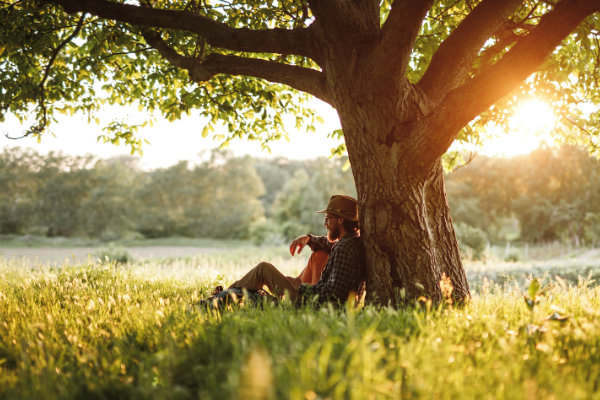
"Homme méditant au pied d’un arbre en harmonie avec la spiritualité et MTC".

The classic formula of Heaven-Humanity-Earth underscores this interdependence: Heaven inspires, Earth nourishes, and Humanity integrates and reflects. When this triangulation is disrupted, something is obscured; when it is harmonized, we rediscover a tranquil clarity and a contagious radiance.

Chinese medicine has given a name to these interactions: Yǎngshēng, or “nourishing life.” This TCM discipline is an art of living spiritually. It connects rest, diet, breathing, movement, emotional balance, and inner cultivation. It relies on exercises and proposes a lifestyle: quality sleep, listening to one’s true hunger cues, sun exposure, walking, and Qi practice.

Yang Sheng promises neither performance nor eternal youth. It offers a joyful simplicity. It prefers regularity to feats of strength and nuance to excess. For example, it teaches you to feel the difference between the fatigue that calls for rest and the fatigue that calls for a walk, between the hunger of the body and the need to eat to distract yourself.

It offers a spirituality that doesn’t oppose daily life but harmonizes with it. The soul is not separate from the world; it learns from it. Harmony isn’t imposed, it arises when the conditions are right.

An aesthetics of presence

Finally, spirituality in Traditional Chinese Medicine (TCM) appears as an aesthetic of presence. It cultivates a sensitive awareness of the quality of the moment, of how the air flows through the room, of how a voice resonates with the listener. It prefers transitions to ruptures, nuances to slogans, and precision to excess. It is as wary of sterile willpower as it is of resigned passivity. It seeks a living balance: enough tension to move forward, enough relaxation to endure.

By accepting to live in this Earth-Sky balance, the individual ceases to struggle against the world and chooses to work with it. Then, life takes on a simpler course; the gaze shines with a calm joy; actions become more effective. The mind is serene, and the heart radiates. One experiences true well-being and optimal health.

Health and spirituality

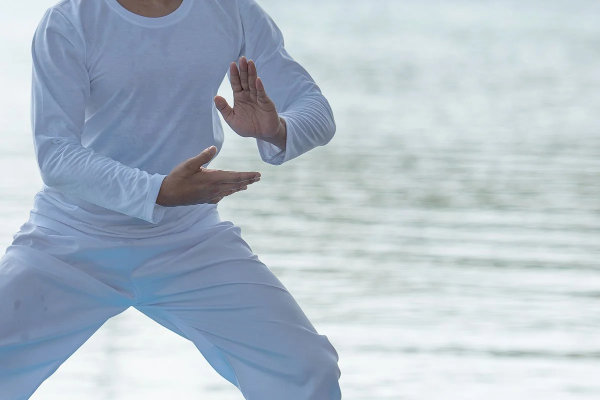
qi gong bord de mer

Traditional Chinese Medicine (TCM) practices are rooted in this philosophy. Therefore, the practitioner treats the patient not as a mere body, but as a complex being with emotions and a mind.

In its diagnosis, TCM identifies energetic imbalances. These can have a purely physical origin (poor diet, toxins, adverse weather conditions, etc.). However, they very often have an emotional, or even spiritual, origin.

Indeed, if an individual lives a life that doesn’t suit them, where they are not in harmony with their true self, this will generate imbalances. And over time, illnesses will develop.

For example, someone who is bored at work, or someone who experiences excessive pressure or harassment, cannot maintain good health. The same is true for someone who lives in a toxic relationship environment, or someone who chooses to conform to external pressures that contradict their true nature. Sooner or later, they will lose their health.

Chinese medicine, by restoring balance, allows for the overall regulation of the body, emotions, and mind. Acupuncture, like herbal medicine, are natural methods that strengthen and stimulate the patient’s connection with Nature and with their own inner nature. They guide the individual toward a path of harmony.

Qi Gong and Tai Ji Quan teach relaxation, conscious fluidity, presence in movement, and strength without rigidity. Energetic nutrition doesn’t moralize about what’s on the plate; it situates it within the natural rhythm of life and the changing seasons.