
Tongue examination

Tongue examination

An essential TCM diagnostic tool

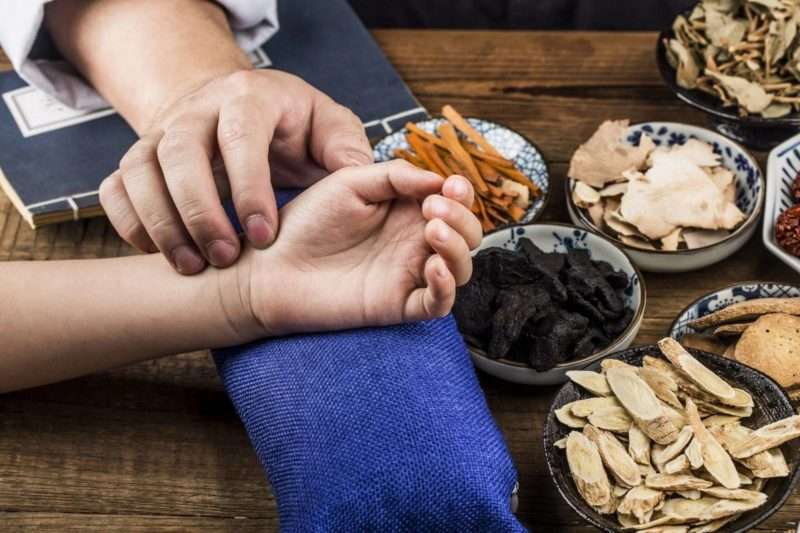
Chinese physicians make extensive use of tongue examination. It forms an integral part of his diagnostic tools, along with observation, questioning, palpation and pulse taking. This tongue examination is based on a holistic vision of the human body as unified and harmonious, with each organ and function interdependent. In this context, the tongue is seen as a microcosm of the body.

The ancient Chinese observed that by examining the tongue, one could gain insight into the state of the internal organs and meridians. Classical texts of Traditional Chinese Medicine (TCM), such as the Huangdi Neijing – The Yellow Emperor’s Internal Classic – explain that the tongue reflects the individual’s Qi (vital energy) and Blood. The shape, color and texture of the tongue reveal information about the health of internal organs such as the heart, spleen, liver, lungs and kidneys.

This diagnosis, which dates back thousands of years, helps to understand energy imbalances in the body. This approach makes the tongue examination a fundamental pillar in Traditional Chinese Medicine (TCM) for assessing a person’s overall health.

What can we see on the tongue?

By observing the tongue, we can assess the deep roots of the body and mind at the origin of energetic imbalances detrimental to health.

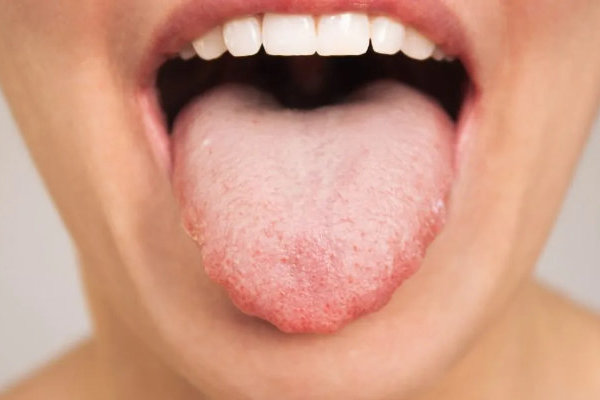
The tongue of a healthy, “normal” individual is bright. It is light red in color and supple. It is neither swollen nor too thin, has no cracks, and should not tremble when pulled. The coating is thin and slightly white, a little thicker behind the tongue. The tongue is slightly moist, but not overly so; no traces of liquid should be visible. The sublingual veins (under the tongue) should not be swollen or too purplish.

In this way, the Chinese doctor diagnoses the state of the organs according to the color of the tongue, its shape, the state of the body fluids, as well as thermal syndromes.

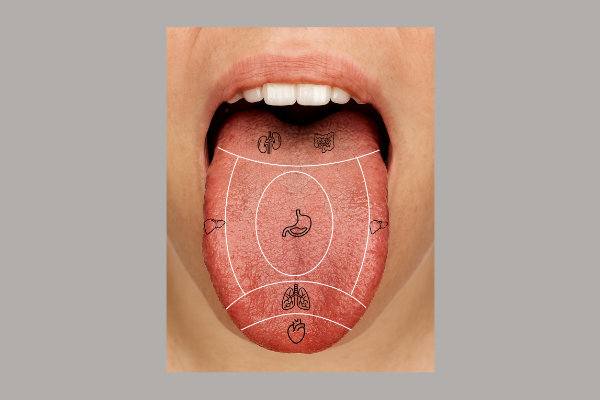
A map of internal organs

  • Location of internal organs: The tongue is divided into zones corresponding to the various internal organs. For example, the tip of the tongue is associated with the heart, while the center represents the spleen and stomach.
  • Color: The color of the tongue reflects the state of Qi and Blood in the body. A pale tongue may indicate a deficiency of Qi or Blood, while a bright red tongue could suggest excess heat in the body.
  • State of body fluids: The appearance of the lingual coating (the layer on the surface of the tongue) reveals the state of fluids in the body. A thick or absent coating may indicate fluid stagnation or dryness.
  • Thermal syndromes: the color, texture and structure of the tongue help determine whether the disease is caused by excess heat or cold in the body.
cartographie de la langue

Benefits of the tongue examination

Tongue examination offers several advantages for TCM diagnosis:

  • It is non-invasive. The examination allows practitioners to gather information about internal health without the need for intrusive tests.
  • The assessment is holistic. In effect, the state of the whole body through a single organ is examined. The language reflects the health of the various systems, enabling a global assessment.
  • It gives precisions to the energetic diagnosis. The different aspects of the tongue enable us to diagnose specific imbalances, such as excess heat or cold, Qi stagnation and blood deficiencies.
  • A powerful aid to follow-up. Observing the tongue enables us to monitor the consultant’s progress. It enables us to see the progress of a treatment and to adjust care according to visible changes.

    It’s fair to say, then, that the examination of the tongue in TCM is an art. This refinement in the art of healing provides access to a subtle understanding of internal imbalances. Mastery of this art is a powerful tool for interpreting the body’s signs. Complementing the other axes of diagnosis, it reinforces the link between external signs and energetic health.

    Key observation points

    During the examination, several aspects of the language are analyzed, each revealing valuable information about the individual’s internal state.

    • Colour
      Bright red: excess heat or inflammation in the body.
      Pale: deficiency of Qi or Blood, often associated with fatigue or weakness.
      Purple or bluish: blood stagnation, which may be linked to chronic pain or poor circulation.
      Yellow: excess heat, often related to the stomach or liver.
    • Coating
      Thick: often indicates stagnation, fluids or an imbalance in digestion.
      Thin: suggests good digestion and fluid balance.
      White: sign of cold in the body.
      Yellow: indicates excess heat.
    • Shape
      Swollen: spleen deficiency or accumulation of fluids in the body.
      Thin: deficiency of blood or body fluids.
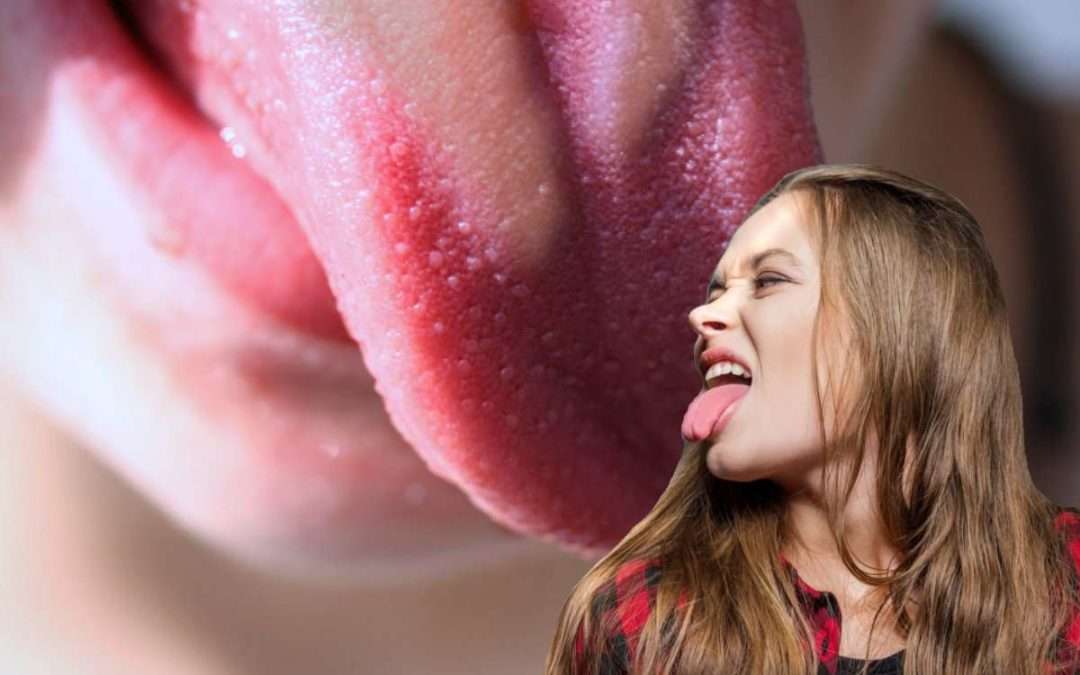
      With teeth marks: spleen Qi deficiency (see photo below).
    • Moisture
      Dry: sign of heat or deficiency of body fluids.
      Wet: reflects a good balance of body fluids.
      Viscous or with stringy saliva: may indicate stagnation of body fluids.

    Clinical case

    A consultant’s tongue is slightly bluish, with a thick, moist yellow coating. There is also a crack in the center of the tongue. The pulse resembles a kind of elusive wave to the touch, and is said to be slippery. (A slippery pulse is fluid, like water flowing under the fingers. It often has a livelier cadence that reinforces the impression of continuous movement).

    What is this person suffering from, and how can it be treated?

    In Chinese medicine, a slippery pulse (滑脉, huá mài) associated with a thick, moist, yellow lingual coating often indicates an accumulation of moisture and heat, especially in the spleen and stomach.

    A bluish tinge to the tongue, on the other hand, may indicate blood or qi stagnation, often linked to cold or disrupted qi circulation. The central fissure is generally linked to weakened spleen and stomach energy, which may be exacerbated by humidity and heat blocking their function.

    Based on these signs, it seems likely that the person is suffering from what is known as a “humidity-heat syndrome” with a deficiency of the spleen and stagnation of qi or blood.

    Principles of treatment

    Treatment would aim to:

    1. Eliminate humidity and heat from the body.
    2. Strengthen the spleen to restore its capacity for transformation and transport.
    3. Circulate qi to relieve stagnation.

    Spleen and hypertension

    Spleen and hypertension

    The role of the spleen in hypertension

    Arterial hypertension (AH) corresponds to an abnormal increase in blood pressure on the artery walls. It is also defined by figures measured by a blood pressure meter: from…

    In Traditional Chinese Medicine (TCM), hypertension is not considered a pathology, but a syndrome that alerts us to a dysfunction of certain internal organs. TCM diagnosis identifies the energy imbalances underlying these dysfunctions. These vary naturally from one individual to another.

    Hypertension according to TCM

    Chinese medicine is always interested in the causes of so-called diseases, and never stops at the symptoms alone. The factors that can lead to hypertension are extremely varied. It is generally accepted that they are closely linked to a healthy lifestyle. Among these, the psycho-emotional aspect plays a vital and recognized role in hypertension.

    Excessive anxiety related to the difficulties of daily life, constant stress, and underlying depression can lead to high blood pressure.

    While each organ can play a role in the development of hypertension, particularly the liver and kidneys, we have chosen to focus here on the role of the spleen in high blood pressure through the production of Tán.

    Spleen functions

    The Spleen is a very important organ in TCM. It belongs to the Earth in the Five Elements theory, and is linked to the emotion of anxiety. It is at the center of the body and has the property of “bringing up” and “bringing down” the essences it extracts from food.

    The Spleen transforms food and drink into blood and qi. It also plays a role in sorting and eliminating waste through stool, urine and perspiration.

    A high-quality diet is therefore essential for the proper energy balance of the spleen. However, our diet is often too rich, and we eat too much.

    What’s more, we consume foods that provide a lot of moisture (sugars, fats), or foods that are too raw or too cold. In both cases, we damage the spleen.

    If the spleen is weak, its transformation and elimination properties will be disrupted. The spleen will not be able to eliminate all the waste from the digestive tract, which will then turn into Tán, or phlegm. The Tán formed can be either cold or hot in nature, depending on the individual.

    This Tán will settle in the most vulnerable areas of the body, particularly on the walls of the blood vessels, thus hindering the free circulation of blood.

    It is through Tán that the spleen is linked to blood pressure. Tán obstructs the blood vessels, making them harder and less elastic. This particularly affects the heart.

    L'angélique chinoise, trésor de la mtc

    Tán and digestion

    This explains the importance of a properly functioning spleen. It plays a decisive role in the quality of digestion. Thus, the same meal eaten by several people will not be digested in the same way by each person, depending on the state of their spleen and, more generally, their yin/yang balance. If the spleen is functioning properly, it can assist in the elimination of excess food.

    As the role of the spleen is to transform nutrients into Qi and Blood, it is important that food is easy to digest. This limits the risk of stagnation of poorly digested food, which can generate Tán.

    Finally, if the spleen is functioning properly, Tán, even if it is produced, can be easily eliminated and will not be deposited in the blood. Thus, Tán is always related to poor digestion or overeating.

    Preventing the formation of Tán

    Tán is not only one of the causes of high blood pressure, but it can also lodge in other parts of the body, particularly the lungs. This can lead to coughing, bronchitis, or asthma. Tán can also block the flow of qi, causing stagnation, poor blood circulation, and pain. Finally, Tán can also disturb the mind and cause mental confusion, anxiety, and depression.

    As we have seen here, it is essential to maintain the spleen, and all of the organs in general, in a good state of energetic balance. Chinese medicine can restore the necessary balance through acupuncture or herbal prescriptions. However, patients must also take action to rebalance their lifestyle, particularly their diet (see below). They must also take care to manage their emotions better.

    Diet and Tán production

    Taking care of your diet is the best way to avoid Tán production. Here are the main foods to avoid:

    1. fried foods (French fries, doughnuts and breaded foods) oily and fatty foods, which are difficult to digest;
    2. Sugar and sweet foods, including sugary drinks (sodas, sweetened fruit juices, energy drinks, etc.) and alcohol;
    3. Dairy products (especially full-fat cheeses, whole milk, cream and yoghurts). These are humidifying and can therefore encourage the production of mucus;
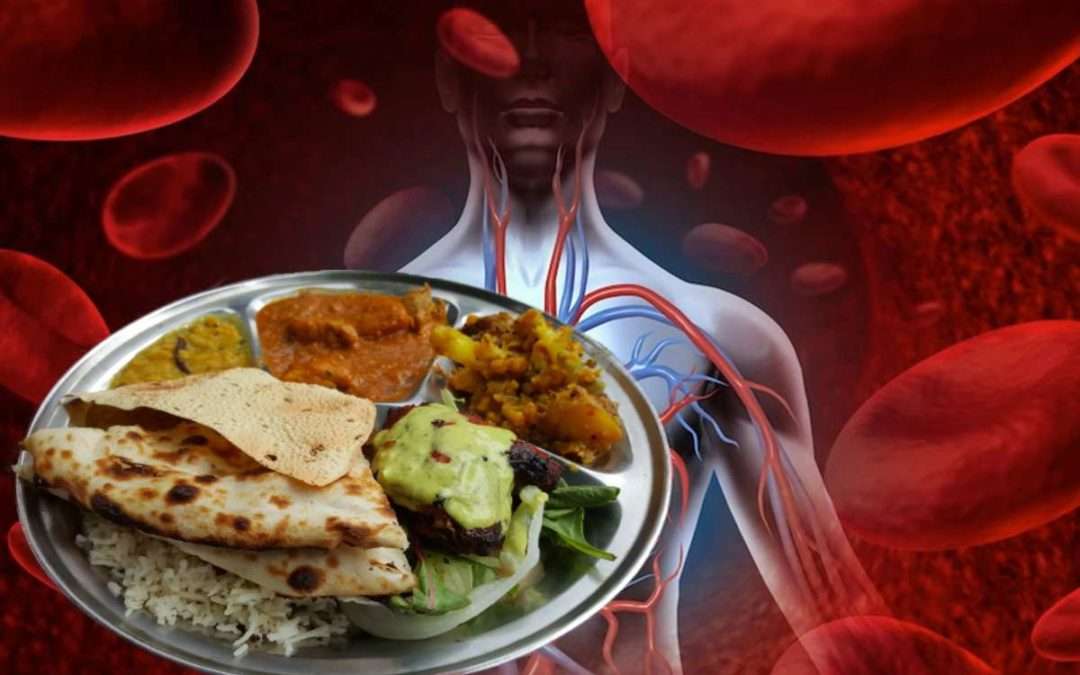
    4. Cold foods and drinks. Cold or iced drinks, or food taken out of the fridge too cold, weaken the spleen. The same is true of too much raw food;
    5. Refined and processed foods from the food industry.

    Care should also be taken with the cooking method. Some cooking methods are conducive to the production of mucus or Tán, such as :

    1. Frying, which increases the fat content of food;
    2. Grilling and roasting at very high temperatures;
    3. Cooking with a lot of oil.

    On the contrary, we recommend :

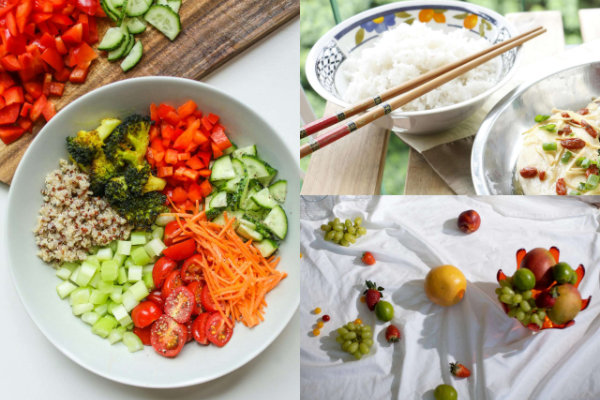
    • Light cooking, such as steaming, which preserves the nutritional value of food while facilitating digestion;
    • Boiled or braised foods;
    • Hot, cooked foods such as soups and broths, which support spleen function;
    • Steamed, lightly sautéed or boiled vegetables;
    • Whole grains (brown rice, quinoa, oats, etc.);
    • Lean proteins (fish, chicken, legumes)

    Understanding pain

    Understanding pain

    Tòng and bì syndromes

    Pain is the number one reason for consultation, accounting for almost two-thirds of all medical consultations, particularly in Europe. It is therefore an essential and delicate element in patient care.

    Generally speaking, pain is something unpleasant that happens in the body. But it is also, at the same time, a personal and therefore subjective mental experience.

    The International Association for the Study of Pain (IASP) describes pain as “an unpleasant sensory or emotional experience associated with present or potential tissue damage.”

    This means that pain, in addition to indicating physical damage (potential or present), is, like its opposite, pleasure, a subjective emotional attitude, which triggers and shapes behavior. Pain is therefore neither a simple perception nor a purely physical sensation. It is fundamentally a mental state.

    An energy block

    According to traditional Chinese medicine (TCM), pain is generally a sign of energy blockage. However, this varies depending on the location of the pain and its causes. TCM classifies pain according to:

    • whether it is permanent or intermittent;
    • whether it corresponds to painful numbness with swelling in the joints;
    • whether it is due to excess pressure, spasms, radiation, etc.

    The problem is complex. Pain is treated by unblocking the meridians, expelling excess fluids or mucus, and releasing blood stagnation.

    For long-term pain, acupuncture and/or Chinese herbal medicine are used to reduce the level of pain and provide relief. Moxibustion, massage, and cupping are also widely used to relieve pain. Pain rarely occurs on its own; it is usually symptomatic of an energy imbalance that will be detected by diagnosis.

    According to TCM, the concept of pain can be divided into two main syndromes: tòng (emptiness) or bì (blockages).

    Bì syndrome

    Bì are painful obstructions of the meridians caused by a combination of three perversions, also known as “the three demons”: Wind, Cold, and Dampness.

    Bì syndrome affects the skin, muscles, vessels, tendons, bones, and meridians.

    Poor lifestyle choices and bad social or eating habits can hinder the circulation of Blood and Qi in the meridians, thereby promoting the onset of Bi-type diseases.

    These include:

    • irregular sleeping patterns,
    • overwork,
    • a cold or damp home, exposing you to Cold, Wind, and Dampness,
    • alcohol abuse,
    • an overly rich or insufficient diet,
    • excessive eating that damages Jing and Blood,
    • intense emotions experienced in excess (Anger, Joy, Emotional Shock, Worry, Sadness, Overthinking, Fear)
    • bruising or blood stagnation after external trauma.

    Tòng syndrome

    Tong syndrome, on the other hand, most often stems from internal causes.

    It occurs in the Five Organs and Six Entrails. It is also found in the “particular Entrails”: Brain, Marrow, Bones, Vessels, Gallbladder and Uterus. Here, we often diagnose a Yin vacuum, a Yang vacuum, a Qi vacuum or a Blood vacuum (or a combination of all four).

    The functions of the human body, whether organic or psychic, are linked together in perpetual motion. Any slowing down or blockage (痹 – bì) of movement in any of the body’s functions can lead to pain.

    Pain is therefore a vast subject insofar as it covers multiple realities. We must therefore distinguish :

    • where it occurs (outside or inside the body),
    • its origin: external (meridians) or internal (organs [qìguān] and viscera [zāngfǔ]),
    • its type: emptiness or fullness,
    • its nature: acute or chronic, etc.

    Here too, the list is long, and taking an anti-inflammatory won’t solve the root of the problem. It’s essential to see pain as an alarm bell that should draw our attention to a change in our lifestyle.

    Painful periods

    respiration profonde

    Many women experience pain before and/or during menstruation. According to a 2005 study, 50-70% of teenage girls experience permanent or occasional dysmenorrhea. For 15-20% of them, this pain even forces them to limit their activity or even go to bed. Worse still, many women experience these pains as normal, almost inevitable.

    But there’s nothing normal about pain. These pains are signs of energy imbalances, and most often of blood and energy stagnation in TCM terms. By restoring the flow of energy through acupuncture and/or pharmacopoeia, Chinese medicine can put an end to these pains.

    This involves mobilizing qi and blood, nourishing blood and toning qi. A personalized diagnosis will enable each patient to be treated appropriately according to the nature of the imbalances observed.

    Thanks to these treatments, women can finally experience their cycles in comfort and serenity.