


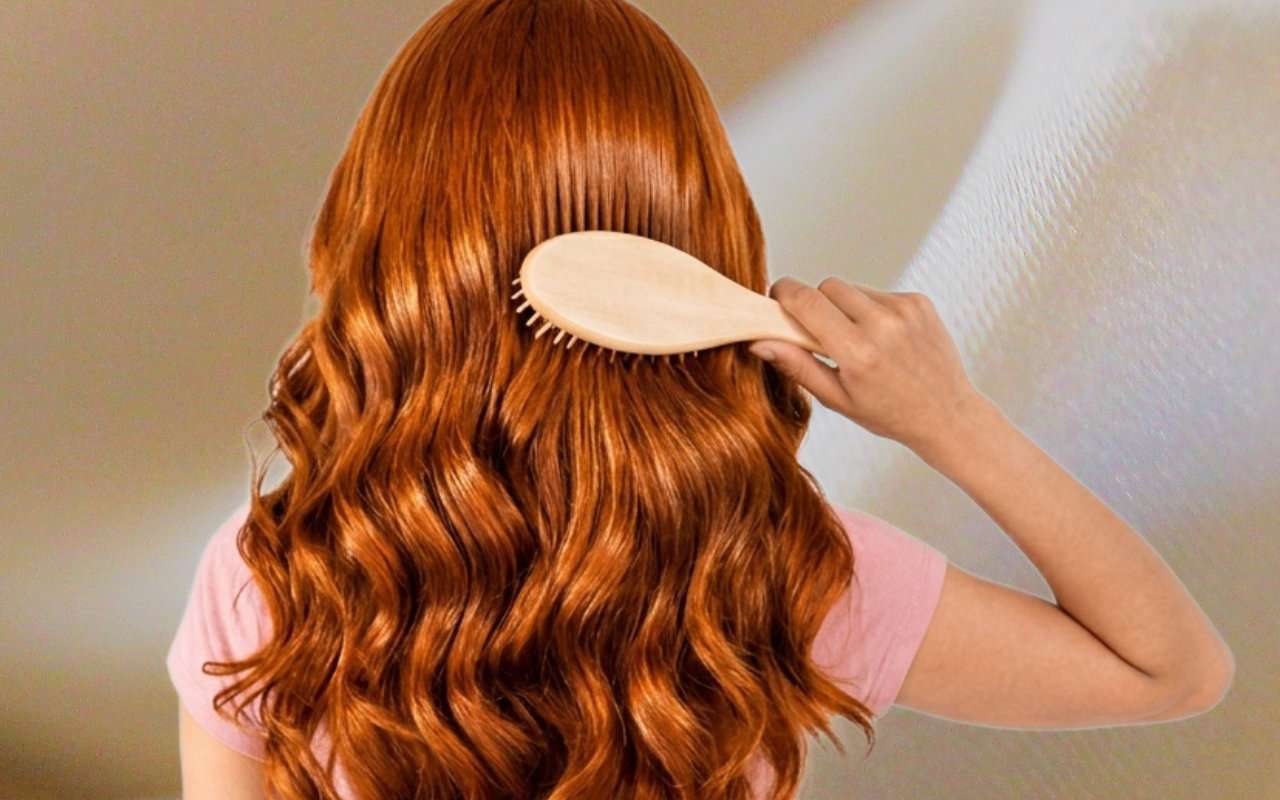
Lung energy for healthy hair
The beauty of our hair is a direct reflection of our health and the overall vitality of our organs. Thick, shiny, and strong hair is a sign of thriving vitality and good circulation of vital fluids. Conversely, dull, brittle, or thinning hair reveals an underlying imbalance. Understanding this connection between health and hair beauty allows us to adopt simple habits to nourish our hair at its source.
The Lungs: the key to beautiful hair
Beautiful hair starts with a strong Lung. In Chinese medicine, the Lung (Fèi) sends energy—Qì—to the skin and hair. If the Lung’s Qì weakens, the complexion becomes duller, and the hair loses its luster and falls out. According to TCM, the Lung is associated with the Metal element and the season of Fall, when trees also shed their leaves. “The Lung is associated with the skin; its splendor lies in the hair,” says the Sù Wèn.
It also disperses defensive energy, Wèi Qì, through the pores of the skin. This energy protects the body’s surface, including the hair: “The Lung receives the hundred vessels and distributes the essence to the skin and hair.”
The Lung thus receives the Qì from the entire body before redistributing it to the surface. This process directly links the Lung to Blood, the other essential nourishment for the hair.
Blood: the lifeblood of hair
Traditional Chinese Medicine summarizes this connection as follows: “Hair is the surplus of Blood.” Xuè—Blood in the Chinese sense—nourishes and moistens the entire body. It rises to the head to nourish each hair follicle. Abundant Blood results in thick, lustrous hair.
Fall places particular strain on this Blood. This season carries with it an excess of dryness—Zào—which is considered its dominant climatic influence in Chinese medicine. This dryness depletes the body’s fluids as well as Yīn and Blood. The hair roots, nourished by this same Blood, are consequently weakened.
The Liver (Gān) acts as a guardian here. It stores Blood during rest and releases it according to the body’s needs. The Kidney (Shèn), meanwhile, preserves Jīng, the original essence. Chinese tradition associates this essence with the vigor of the hair roots. An abundance of Jīng promotes regular regrowth. Fall precedes the season of the Kidney, winter. Thus, taking care of Jīng in the fall prepares the body for winter.

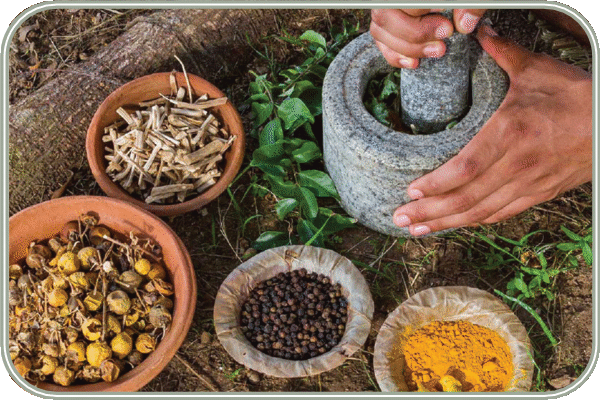
Finally, a deficiency of Blood can weaken the hair shaft. It becomes thinner, duller, and sometimes brittle. This is where pharmacopeia comes into its own. Indeed, Chinese herbal medicine (Zhōng Yào) has for centuries recommended herbs to nourish the blood and Jīng. One of these herbs has a particularly rich history (see sidebar).
Taking care of your hair
Beyond herbal remedies, a simple daily routine can help maintain healthy hair. It involves using a simple comb first thing in the morning. In fact, the head contains a dense network of Yáng meridians, with nearly fifty acupuncture points (Zhēn Jiǔ). Daily combing gently stimulates this network. A Chinese proverb sums up this ancient practice: “Combing a hundred times each day wards off a hundred ailments.” This habit has been a part of Chinese households for generations.
This practice is a form of self-massage, in the spirit of Tuī Ná. It is performed from the forehead toward the nape of the neck, in even strokes. The pressure should remain moderate, never forceful. The movements are slow and enveloping. A slight warmth in the scalp indicates good local circulation. The morning is particularly well-suited for this ritual. A wooden or horn comb helps minimize static electricity.
Chinese dietary therapy also offers simple solutions for the fall, nourishing the body from within.
Black porridge, an Autumn delight
Therapeutic nutrition (Shí Liáo) associates the color black with a special connection to the Kidney. Thus, black sesame seeds and black beans fit into this framework. They have long been a staple in family porridges during the fall. This recipe is for the whole family.
Ingredients for two bowls: three tablespoons of black sesame seeds; two tablespoons of black beans, soaked overnight; one tablespoon of gǒu qǐ (goji) berries; one liter of water; a pinch of cane sugar (optional).
Preparation: Soak the black beans overnight, then rinse them. Cook them for 30 minutes in gently simmering water. Add the black sesame seeds, lightly dry-roasted. Continue cooking for 15 minutes, covered. Stir in the goji berries right at the end of cooking. Let it rest for a few minutes before serving warm.
This porridge is best enjoyed in the morning, two to three times a week during the fall.
Hair, like trees in the fall, goes through its own seasons. When it loses its luster or experiences temporary shedding, it’s simply an invitation to listen to our body’s deep needs. Thus, through the rituals it offers, Chinese medicine allows us to provide our bodies with the ideal conditions to regenerate and transition smoothly through the fall.
Hé Shǒu Wū : between legend and reality
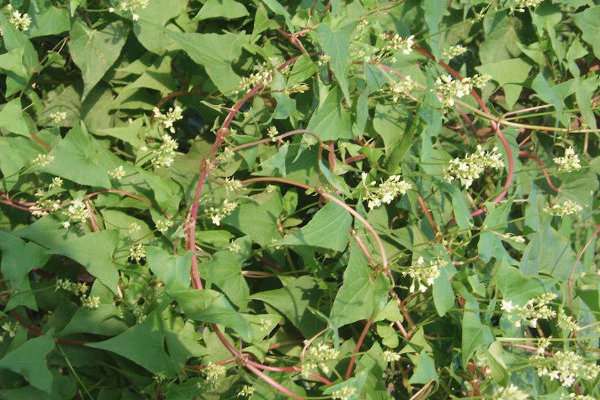
The Běn Cǎo Gāng Mù, a botanical compendium written by Lǐ Shízhēn, devotes a lengthy passage to Hé Shǒu Wū. Legend tells the story of a frail man. By consuming the root of a wild vine for years, his white hair is said to have turned black again over time. His name has thus been forever associated with the plant.
Hé Shǒu Wū grows as a vigorous vine. Its stem takes on a characteristic purple hue. Its opposite leaves resemble those of wild yam. Small, pale yellow flowers appear in late summer. The plant thrives in southern China, in loose, shaded soil. Its tuberous root, harvested after several years of growth, contains the bulk of its medicinal properties.
Lǐ Shízhēn describes its flavor as bitter and astringent. He classifies it as having a slightly warm nature. The text mentions its effects on the complexion and on the color of the hair and beard. This plant is commonly used in Chinese herbal medicine.
Hé Shǒu Wū is generally included in a prescription, along with other herbs, under the guidance of a Chinese herbalist. It is known in particular for promoting longevity and supporting the Liver and Kidney.
0 Comments