




The fruit of inner vitality
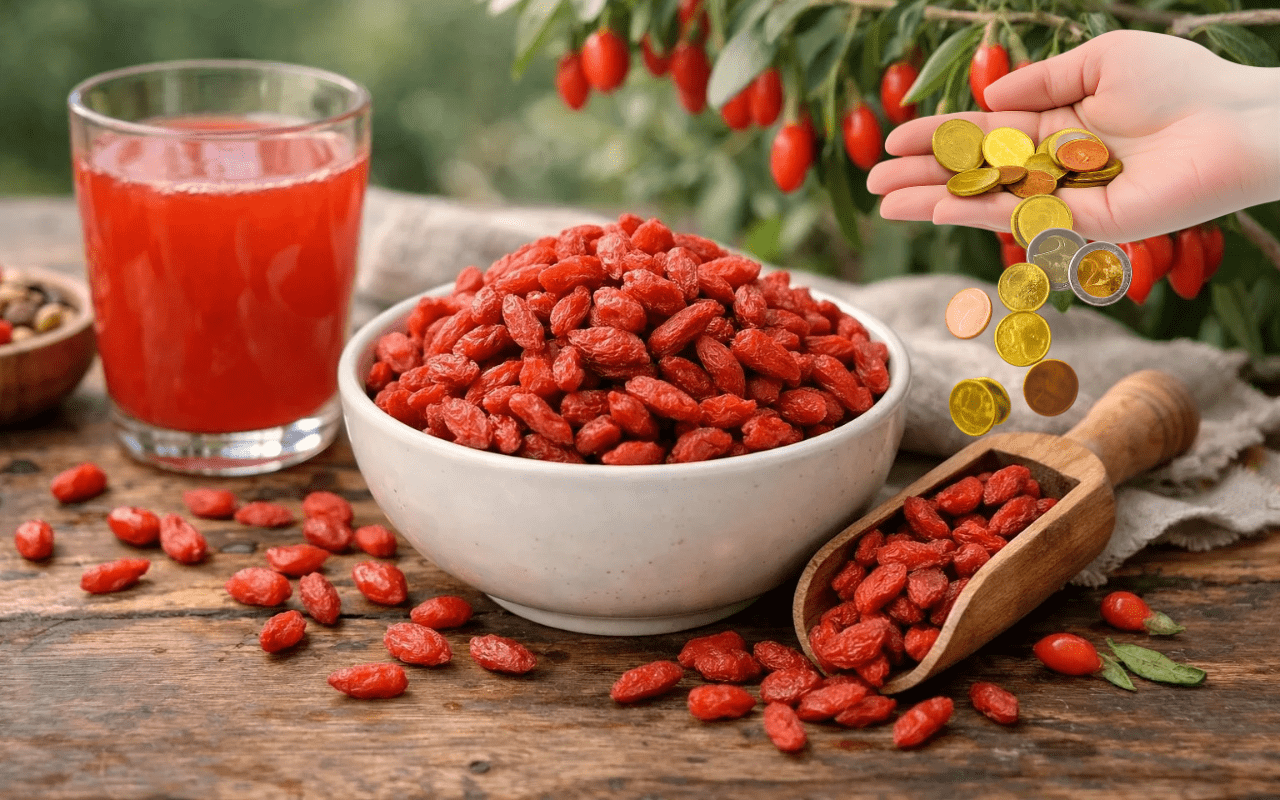
Goji berries are increasingly popular in the West, where they have been known since the early 1990s. Asian countries have consumed them for millennia. They are used as medicinal plants in China, Mongolia, Tibet, and many other Asian countries.
Traditional Chinese medicine, in particular, incorporates goji berries into numerous recipes.
The Treasure of Ningxia
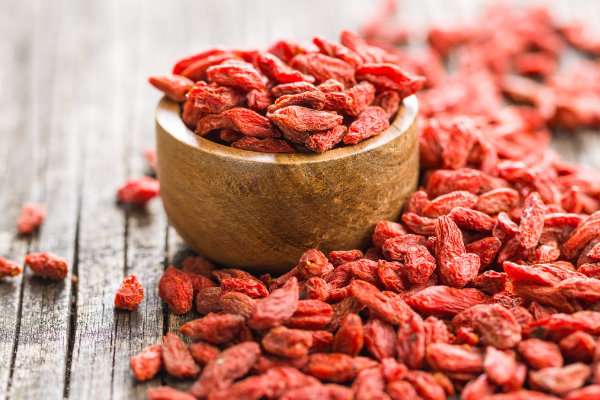
Goji berries (Gǒu Qǐ Zǐ, 枸杞子), better known in the West as goji berries, are the ripe fruit of Lycium barbarum or Lycium chinense, a robust shrub in the nightshade family (Solanaceae). This small, oblong fruit, a vibrant orange-red when dried, embodies concentrated vitality.
Its thin, slightly leathery skin protects a tender, sweet pulp with a subtle hint of bitterness. Goji berries are rich in juice when fresh. The shrub typically grows to a height of 1 to 3 meters. Its supple, sometimes thorny branches are adorned with lanceolate leaves and delicate purple flowers. These bloom between June and August. The berries then form and ripen gradually, changing from green to a brilliant red, a sign of their optimal maturity.
The authentic terroir – dào dì – of Gǒu Qǐ Zǐ is the Ningxia Hui Autonomous Region, China (see boxed).
Science supporting tradition
Several universities specializing in Traditional Chinese Medicine have recently studied goji berries to analyze their active ingredients.
Nanjing University of TCM has identified more than 321 traditional Chinese medicine formulas containing Goji Berry (Gǒu Qǐ Zǐ). At the heart of its action are the polysaccharides of Lycium barbarum (LBP). The fruit also contains complex chains of glucose, arabinose, galactose, mannose, xylose, and other sugars.
Research conducted at the Institute of Biophysics of the Chinese Academy of Sciences shows that LBPs improve environmental tolerance. In fact, they regulate the composition of the microbiota, reduce systemic inflammation, and support the body’s adaptation to climatic variations.
Other studies carried out in Ningxia highlight its rich biochemical profile. It contains: antioxidant flavonoids, alkaloids, carotenoids (including zeaxanthin, which is highly protective for the retina), vitamins from groups B, C and E, 18 essential amino acids, organic germanium and various trace minerals.
These elements have hepatoprotective, hypoglycemic, anti-atherosclerotic, and anti-osteoporotic effects. Numerous studies also confirm its anti-aging action. This action works by reducing oxidative stress, protecting mitochondria, and maintaining telomerase. A significant immunostimulation is also observed. Indeed, there is an increase in white blood cell production, a strengthening of humoral and cellular immunity, as well as the activation of erythropoiesis.
Restorative and harmonizing
According to Traditional Chinese Medicine, Gu Qizi is mild (gan) and neutral (ping) in nature.
Its primary actions are to hydrate the Kidneys (zi shen), replenish the Liver (bu gan), improve eyesight (ming mu), lubricate the Lungs (run fei), and tonify the Blood (bu xue) and body fluids (jin ye). These properties make it a key ally for cultivating balance when Yin declines with age or in the face of daily stresses.
In the elderly, where Yin naturally diminishes, it is particularly restorative. It gently supports Kidney energy, aiding libido, erectile dysfunction, hot flashes, and the regulation of internal heat. It nourishes both Liver Yin and Blood. Finally, it moisturizes the eye structures and clarifies vision, particularly in cases of eye strain due to prolonged screen time.
In the lungs, it effectively treats persistent dry coughs. Its action on the blood, as demonstrated by the doctrine of signatures (its bright red color is linked to blood), promotes a radiant complexion and stronger hair.
When to call for help
Li Shízhēn specifies in the Běncǎo Gāngmù the particular benefits of Goji berries for Liver and Kidney Yin deficiencies. It is traditionally recommended for:
- Vertigo (xuàn yūn);
- Tinnitus (ěr míng);
- Dull, persistent pain in the lower back and knees (yāo xī suān tòng);
- Dry, painful eyes;
- Blurred vision with floaters (fēi yíng);
- Dull complexion;
- Premature graying of hair;
- Insomnia with vivid dreams.
A small handful (10 to 15 g) per day is generally sufficient. It can be infused in hot water, added to porridge, soup, or tea with red dates (Dà Zǎo), or combined with Dāng Guī to nourish the Blood more deeply. Its mild flavor makes it enjoyable for the whole family.
Cultivation and harvesting
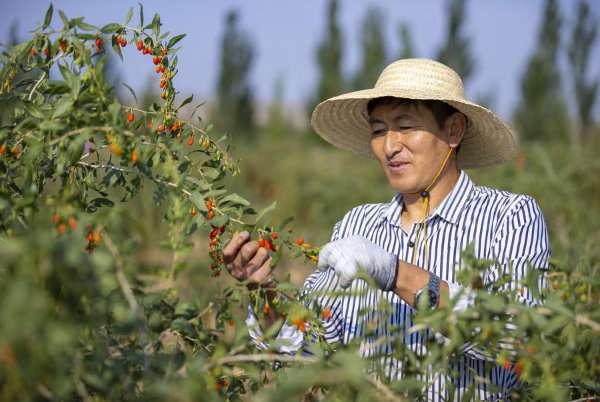
The Ningxia Hui Autonomous Region, and especially Zhongning and Zhongwei counties, constitute the authentic terroir for goji berries. Its sandy, alkaline soil is enriched by the alluvial deposits of the Yellow River. Furthermore, this region enjoys over 300 days of sunshine annually, significant day-night temperature variations, and a dry continental climate. All of these elements are ideal for goji berry cultivation.
The harvest season extends primarily from June to October. A first harvest in June-July yields the “summer fruits” (xià guǒ), the most prized for their generous size, pronounced sweetness, and high juice content. A second autumn harvest follows after a dormant period in August-September, allowing the shrub to replenish its strength.
The berries ripen in successive waves every 5 to 10 days. The fruit is harvested by hand as soon as it reaches a deep, vibrant red, becomes firm yet still tender to the touch, and the stem detaches easily and naturally.
The fruit is carefully sorted according to size and color, gently rinsed in clear water, and dried in the shade or at low temperatures to preserve its soft pulp and prevent mold or nutrient loss. This traditional process, unchanged for centuries, maintains the fruit’s nutritional value.
0 Comments