




A virtue with multiple benefits
Humility is often scorned, considered a weakness. Indeed, our contemporary society tends to value everything that enhances our appearance, at the expense of authenticity.
Yet, in all the great spiritual traditions, humility is considered an essential virtue. It is the foundation upon which all true growth rests. For humility does not diminish the individual: it liberates them. It is a source of inner harmony and therefore of health.
Knowing your limits
Humility is first and foremost about recognizing one’s own limitations, being aware of both one’s strengths and weaknesses. It allows us to face reality head-on, ceasing to delude ourselves. This inner posture brings a precious flexibility, like that of bamboo. Indeed, bamboo, which bends, is stronger than oak, which resists. Thus, where arrogance rigidifies, humility allows us to remain relaxed, to adapt, and not break in the face of adversity. It places the individual in an attitude of listening and receptivity.
This quality aligns with the principle of non-action, or Wu Wei. It is not about being passive, but about respecting the natural flow of things and ceasing to try to control everything. For living in harmony with reality, rather than fighting against it, brings profound peace.
But practicing humility is not always easy. In everyday life, the ego resists: the need to be right, to control, to validate oneself.
Marc, 52, a senior executive accustomed to being in control of every situation, lived in a state of constant tension. Insomnia, irritability, and interpersonal conflicts were the visible consequences. It was only by embarking on a journey of self-discovery that he perceived the limitations of this approach. Gradually, he learned to listen more, to acknowledge his mistakes, and to truly delegate. “The day I accepted that I couldn’t control everything, my body relaxed,” he recounts.
Humility and balance in Chinese medicine

Indeed, the need for control generates tension, frustration, and stress. It keeps the body in a constant state of alert. According to Traditional Chinese Medicine (TCM), this tension and frustration are associated with stagnation of Liver Qi.
The Liver governs the free flow of Qi; when it is constricted, excess pressure rises, generating irritability, muscle tension, and insomnia. Mental agitation, on the other hand, affects the Heart, the residence of the Shen (spirit).
Conversely, humility fosters letting go. It allows us to accept what is beyond our control, thus reducing internal conflicts.
By allowing a release of these rigid control mechanisms, the practice of humility promotes a smoother flow of Qi. This results in improved sleep, more stable digestion, and emotional calm. Acupuncture is particularly valuable in supporting this process. It helps to circulate Liver Qi, relieve stagnation, and calm Heart Shen.
Regular sessions thus help the body regain greater flexibility.
Abandon the pursuit of performance
Humility is accepting who we are without comparing ourselves to others or worrying about their judgment. It’s letting go of competition and the pursuit of performance. Because, once again, these attitudes are a source of unnecessary tension. They distance individuals from their deepest truth and prevent them from navigating life in a relaxed and harmonious way.
Sophie, 38, involved in numerous practices, was seeking to “progress” and reach a certain level. Despite her efforts, she felt stuck. A simple remark from her teacher sparked something: “You’re trying to become spiritual. Just be yourself, without trying to impress anyone.” By abandoning this quest for performance, she discovered a new simplicity: “It was from the moment I stopped wanting to be advanced that I truly began to understand.”
Thus, humility is a silent, almost invisible, yet profoundly structuring force. Lao Tzu expresses this beautifully in the Tao Te Ching: “All streams flow to the sea, for it is lower than they. It is through its humility that it reigns supreme over the waters.”
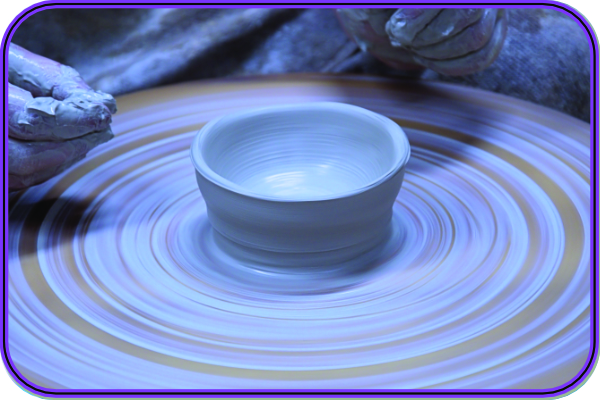
This image illustrates the paradoxical power of humility: it is by placing oneself at the bottom that one becomes capable of embracing everything else and rediscovering a profound harmony with the natural flow of life.
Humility is not renunciation. It is a profound wisdom that allows humankind to find its place in the natural order of things.
Cultivating humility on a daily basis
How can we cultivate this quality in everyday life? It involves simple, repeated practices, to be carried out with consistency and patience. Because transformation takes time. Here are a few avenues to explore:
- Acknowledge your mistakes without justifying yourself;
- Truly listen, without trying to dominate the conversation or prepare your response;
- Accept that you don’t know everything and thus open yourself up to learning;
- Act and do good without expecting recognition or reward;
- Observe your ego: identify the moments when you seek to be right, to shine, to dominate;
- Remember your human condition: we are all limited, mortal, and learning.
Little by little, these adjustments transform our way of being. They establish a more stable peace, greater clarity, and more harmonious relationships.
They bring us closer to a state of harmony. Thus, our energy balance is restored, our qi flows smoothly, and our health improves.
0 Comments